

Introduction
Egg binding (dystocia) is a problem that can occur in almost any bird, but is more common in the smaller female birds. Canaries, lovebirds, cockatiels, budgies (budgerigars or parakeets) and finches are the commonly affected breeds.
Egg binding can be a serious problem, and is considered an emergency, requiring delicate and professional care. Unfortunately, some birds can succumb in spite of this care if not brought to us soon enough.
Our treatment protocol utilizes the guidelines of the Association of Avian Veterinarians (AAV).
The Long Beach Animal Hospital, staffed with emergency avian vets, is available until the evenings 7 days per week to help if your pet is having any problem, especially straining to have an egg, breathing hard or bleeding. Think of us as your Long Beach Animal Emergency Center to help when you need us for everything from minor problems to major a major emergency.
We serve all of Los Angeles and Orange county with our Animal Emergency Center Long Beach, and are easily accessible to most everyone in southern California via Pacific Coast Hwy or the 405 freeway.
If you have an emergency that can be taken care of by us at the Animal Emergency Hospital Long Beach always call us first (562-434-9966) before coming in so that our veterinarians can advise you on what to do at home and so that our staff and doctor can prepare for your arrival. To learn more please read our Emergency Services page.
Whenever we suspect a bird is egg bound like this budgie, it is immediately warmed up and placed in 100% oxygen if needed. This type of breathing is called dyspnea, and is a sign of severe disease.
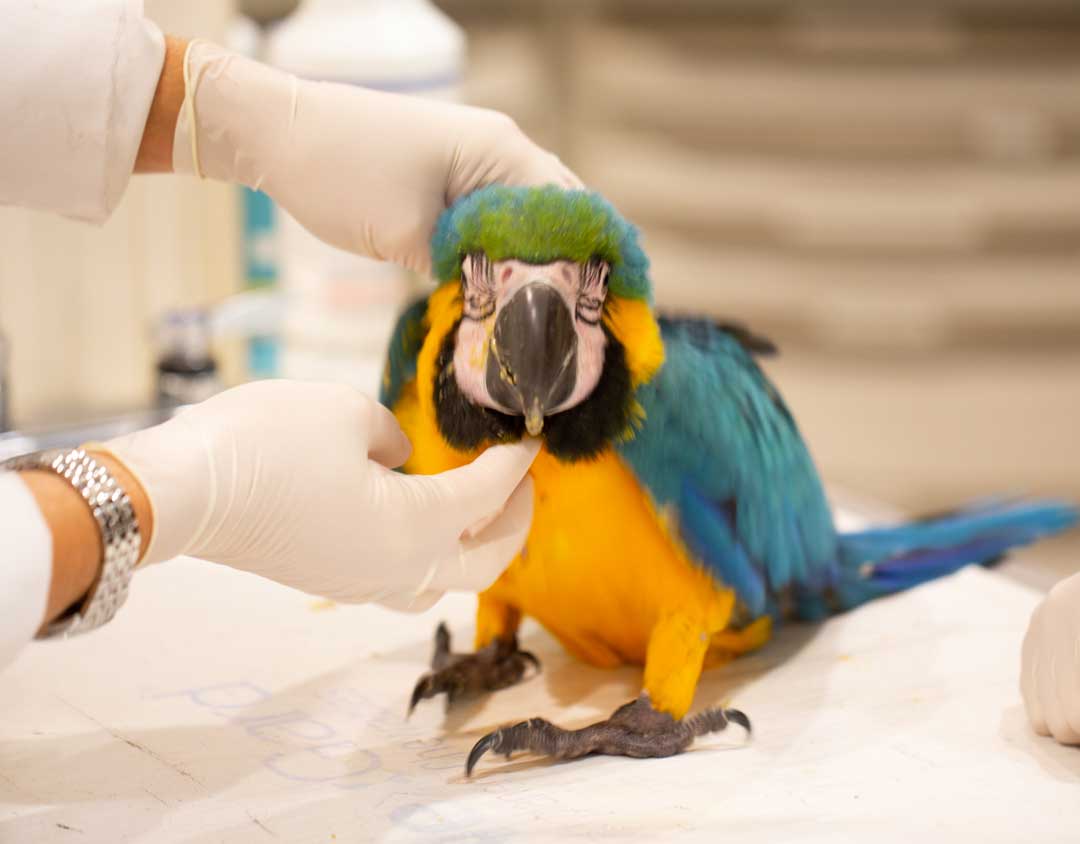 We don’t see egg binding in larger birds like this Macaw very often, it at all
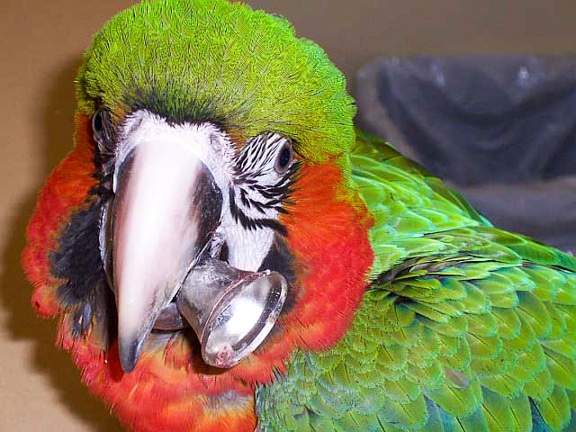
Macaws aren’t off the hook for problems though, like this one with a bell stuck on its tongue. This link shows how we removed it.
Birds are notoriously good at hiding symptoms of a serious problem until it is too late for treatment. It behooves you to pay special attention to your birds habits, and bring it in for an exam by one of our doctors at the first sign of any problem, no matter how minor it seems.
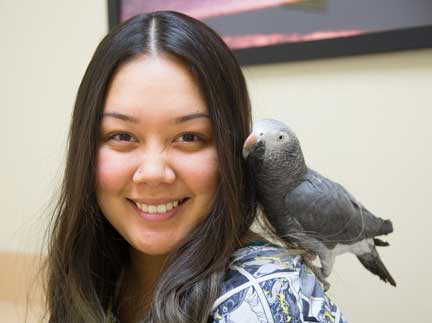
We like to see our birds come in like this healthy African Grey perching on Emily, that is in for a routine examination
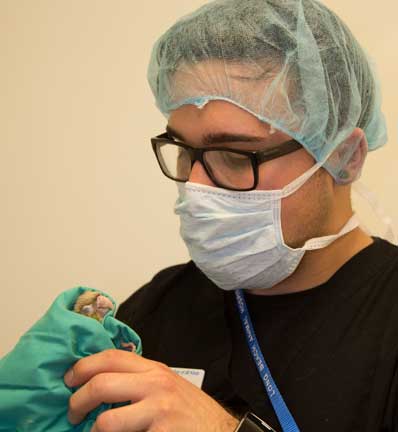
Too often they come in sick like this bird in need of emergency treatment

The prognosis is not good when they are this ill
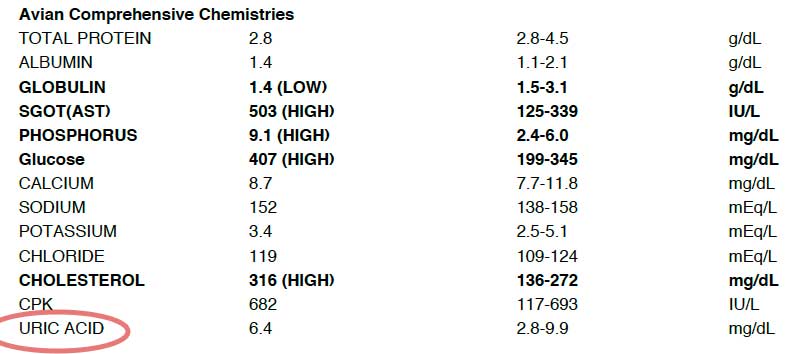 Sometimes they are ill because the egg is blocking waste products from being excreted. This might show up as an elevated Uric Acid on some ill birds. This bird has a normal uric acid, but the liver test, called SGOT (serum glutamic pyruvate transaminase) is elevated.
What is Egg Binding?
In this problem the bird has an inability to pass an egg after trying for several hours.
Causes of Egg Binding in Birds
Infection, trauma to the reproductive tract, inadequate nesting area, excessive egg laying, obesity, and nutritional problems are some of the factors involved with this problem. Those birds on all seed diets, or those with an inadequate calcium intake, are particularly prone. An egg that is too soft can also cause the problem.
Some birds are just prone to the problem, and even environmental factors like hypothermia can be involved. Determining the exact cause can be difficult.
We can sometimes get a feel for a bird that might have a problem laying eggs when we take a radiograph. The first one shows good density in the bones of the forearm and wrist of a bird. In the second one you can see there is less density, and sure enough, this bird was egg bound.
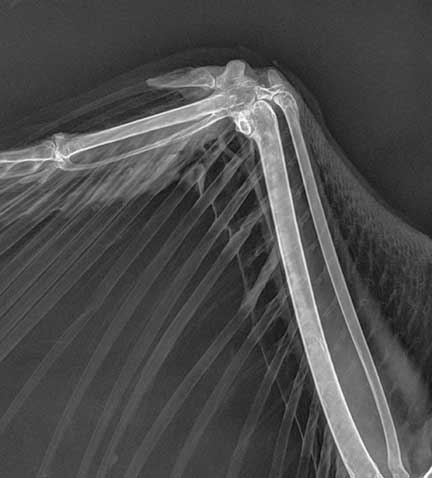
These bones have more mineral density, as evidenced by their whiter appearance. This means there is adequate calcium reserves.
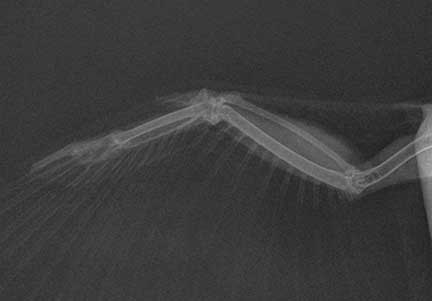
The same area of a smaller bird shows less mineral density
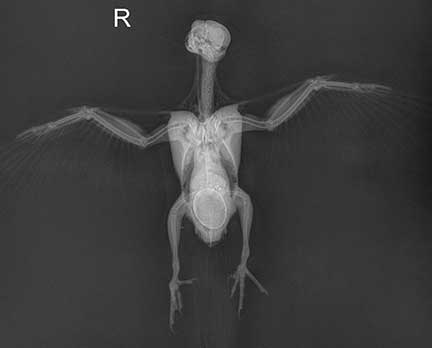
This is the full radiograph of the bird above showing that indeed there is an egg in it
Egg Binding Symptoms in Birds
Birds that have this problem might exhibit depression, labored breathing, straining, abdominal distention, lack of droppings, whitish droppings only, fluffed appearance, and poor appetite. There might even be a broken bone due to inadequate calcium. These are also the symptoms of other avian diseases. Pressure from a stuck egg can even interfere with nerve function to the legs.
Sometimes the only symptom is your bird sitting at the bottom of the cage. Unfortunately, the only symptom in some cases is a dead bird found at the bottom of the cage.

Even a bird that is still eating can be seriously ill
How is Egg Binding Diagnosed in Birds?
In many egg bound birds there is a history of recent egg laying. Some birds exhibit sexual behavior and even build nests. During physical examination of a bird with a distended abdomen an egg can sometimes be palpated. There are other causes besides egg binding in sick birds with distended abdomens, so it is important to follow a thorough diagnostic process.
Egg bound birds are very ill, and need to be handled gently so as not to stress them to the point that they succumb to this problem.

Our examination is rapid and gentle, and once we determine the problem they are immediately put into a warm room since they are very susceptible to hypothermia

We wrap them in a towel for the exam, and do not use gloves. This towel gives them warmth and comfort, and we can perform the exam with our bare hands to feel for subtle problems while our patient is wrapped in a comfortable towel.
In most cases our doctor can make a diagnosis of a probable egg bound bird on palpation of the abdomen. Technically, their abdomen is called a coelomic cavity in birds, since they have no diaphragm to separate the chest from the abdomen, and it is all one cavity.
X-rays are a significant aid in making this diagnosis, but only if a bird is strong enough. Eggs shells have a high level of calcium, so depending on how well they are developed, might show up vividly on an x-ray. Some eggs are poorly calcified and do not show up well on a radiograph.
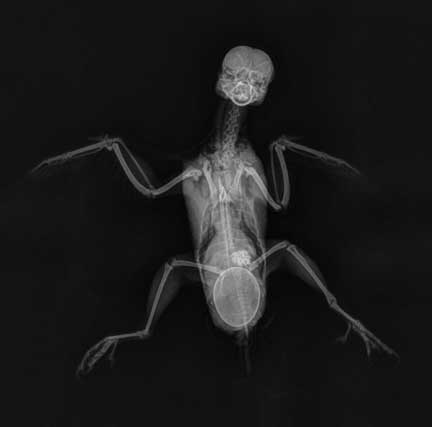
It’s not difficult to see the egg on this budgie that is laying on its back
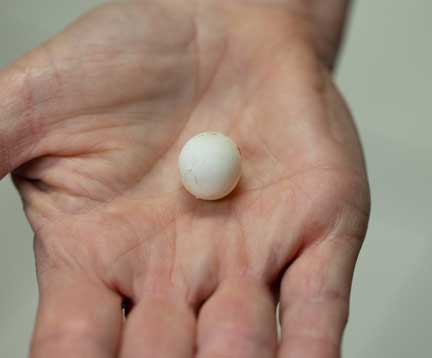
This is the egg from the bird above. It looks tiny in this hand, but not so tiny for a bird this size as you can see from the radiograph above!
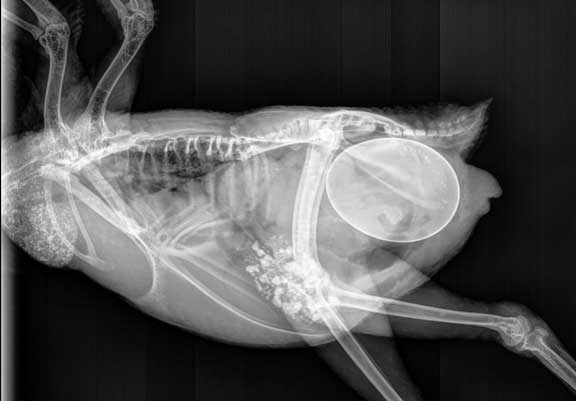
This bird also has a large egg in relation to its body size. Do you see the grit in the gizzard (ventriculus) also? We have a detailed page if you to learn more about reading bird radiographs- click here.
How is Egg Binding Treated in Birds?
Egg bound birds are very ill and require emergency care. Many are hypothermic and require immediate warming. They can be toxic from the inability to eliminate waste products and dehydrated from poor appetites and weakness, so warm fluids are also administered.
Depending on the severity of the problem, we might give the fluids subcutaneously (SQ) or intravenously (IV). If the bird is in shock we might give these fluids via an intraosseus catheter.
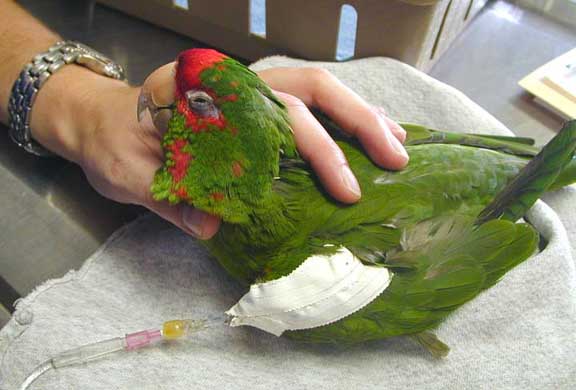
This ill bird is being given fluids intravenously (IV)
Calcium is also administered to aid in muscle contractions and hopefully expulsion of the egg on its own. Medications to stimulate the uterus to contract are also used.
Whether or not they help depends on the cause of the problem. In most cases, this conservative approach works, so we try this first.

Some are so ill that they need life-saving 100% oxygen in addition to supplemental warmth
If medical therapy does not work we attempt to help in the removal of the stuck egg. Once the bird is more stable we can sometimes gently expel the egg with liberal lubrication and digital pressure. If the egg is adhered to the uterus digital pressure might not work. Inserting a needle with a syringe attached directly into the egg allows us to collapse the egg and make expulsion easier.
Sometimes the medical therapy works to a certain point and the egg starts coming out. This one did, still in its reproductive membrane.
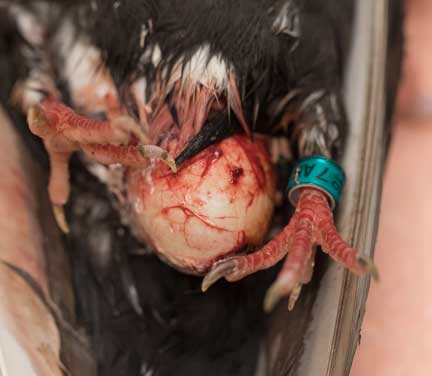
This bird is traumatizing its reproductive organs, so this is treated as an emergency
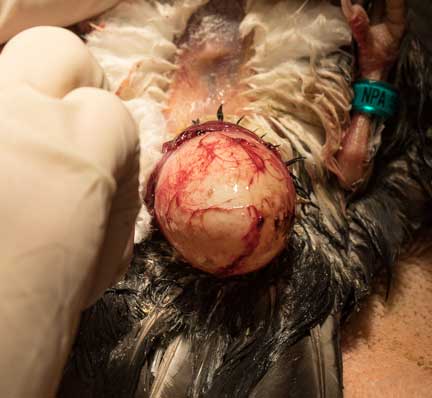
After warming it up and stabilizing with warm fluids, it was immediately sedated and examine and cleanses
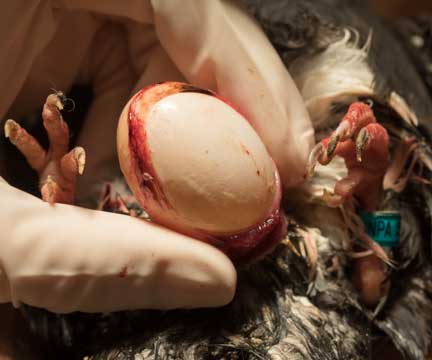
Gentle manipulation, without tearing any membranes, allowed us to slowly extrude the egg
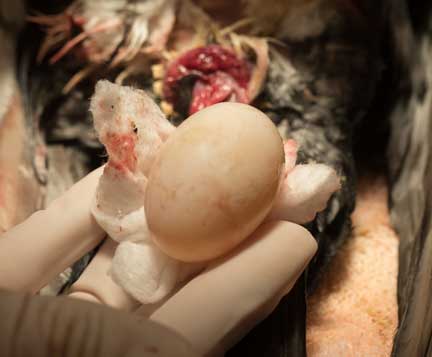 Out it came, ready to be made into an omelette !
Sometimes they don’t come out this easy, and we need to get them out. After stabilizing and anesthesia we use a speculum and high intensity light to assess the situation.
 These are high risk patients, and are closely monitored while under anesthesia. Anesthesia is important to us in veterinary medicine, and you can learn much more about it form our anesthesia page.
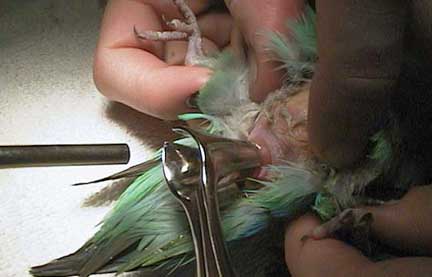
This female is being examined with a lubricated speculum to determine the exact nature of her problem. We can deflate the egg by passing the needle through the speculum. On the left you can see the high intensity cool light that allows greater visualization.

Birds need special attention and care, and after any medical or surgical treatment they are watched carefully by our staff
Are small birds prone to develop egg binding?”
We tend to see this problem in the smaller birds like parakeets (budgies) and cockatiels, as opposed to parrots and macaws.
Tips to Prevent Egg Binding in Birds
There are factors involved with this problem that we have no control over. Factors we can control are good nutrition, a clean environment, spaying birds that are predisposed to egg binding or are excessive egg layers, minimizing obesity and stimulating exercise. Another option, especially in prolific egg-laying cockatiels, is to use a drug called Lupron. We use this in ferrets also.
Careful daily observation of your pets daily habits will help you recognize the early symptoms of this disease. No matter what the problem, any time your pet bird shows any symptoms of a disease, no matter how subtle, it is considered significant and requires immediate veterinary care.
This is because birds are masters at hiding illness, and we are all too often presented with sick birds in advanced stages of disease. Our ability to return these birds to normal health is diminished because proper care has not been given early on in the disease process where it is most beneficial.
Are Small Birds Prone to Egg Binding?
The smaller birds like the budgies and cockatiels are the birds that are most susceptible to egg binding.