

What is Feline Immunodeficiency Virus in Cats?
The Feline Immunodeficiency Virus, also known as FIV, was discovered in California in 1986. It is transmitted from cat to cat primarily by bites, as the virus is shed in the saliva. Contact through grooming, sharing food etc., does not spread the virus. This disease is found worldwide. Prevalence varies from 2.5% up to 47%, and depends on the country.
The prevalence of this disease has decreased significantly since it was first diagnosed. This is due to increased awareness and testing.
Even though this virus acts similar to the AIDS virus in people, humans are not infected with FIV.
FIV is closely associated with FeLV– you should learn about both diseases if you have a cat.
Pathophysiology of the FIV Virus
FIV preferentially infects white blood cells (WBC’s) which are an essential part of a cat’s immune system. The virus disables or destroys the white blood cells, and leaves its host susceptible to infections. Once a cat is infected with FIV it is infected for life, and can transmit the virus if it bites another cat.

We monitor white blood cells (WBC’s) in our routine blood panel. You can see a normal WBC of 10,400 at the top of this CBC (Complete Blood Count).
Cause of Feline Aids
FIV is caused by a retrovirus called the lentivirus. It is similar to the retrovirus that causes FeLV in cats, and causes similar symptoms, particularly supression of the immune system. It is also similar to the human AIDS virus, and is sometimes referred to as cat AIDS. There is no evidence that people can get AIDS from a cat that has FIV.
Only a small percent of cats in the U.S. are infected with this virus. One of the most prevalent methods of transmission is bite wounds in fighting cats, especially roaming males. Kittens can possibly pick up the virus in the uterus and while nursing, although most infections are in adult cats.
This virus is easily killed by routine detergents and disinfectants.
FIV Stages
FIV has three clinical stages. The initial acute stage occurs approximately four to six weeks after infection. It may manifest as, but is not limited to, a fever, swollen lymph nodes, a low white cell count or any combination of the above. Most cats survive this phase without treatment. Most cat owners do not even know this has occurred since symptoms are minimal and cats are experts at hiding illness.
The second phase is a period of relative normalcy lasting months to years. The timetable depends on a host of factors like nutrition, stress, parasite load, and each cat’s immune system. Since all of this is occurring internally, most owners still do not notice any problems with their cat.
The third stage of the infection results from a progressive destruction of the white blood cells and dysfunction of the immune system. This leads to the vast array of different symptoms seen, and is when owners typically first bring in a sick cat for an exam.
Feline Aids Symptoms
A variety of clinical syndromes may develop, waxing and waning for years or months until the cat succumbs. The most frequent finding is a chronic oral infection of the gums, cheeks or tongue. This infection is known as stomatitis.

When a cat is presented with gums that look like this it might have this virus and should be tested to know for certain

Oftentimes it is dental disease, and not FeLV, that causes the gums to be inflamed. In this case, this is Grade II periodontal disease.
Cats may also acquire upper respiratory, eye, ear, or skin infections. Some cats may also show vague signs such as lethargy, fever, diarrhea, poor haircoat, weight loss or inappetance (anorexia) and a certain percentage may develop cancer. Diseases of internal organs like the liver, kidneys, brain, lung, GI tract, and eyes (uveitis) are also associated with FIV due to its immunosuppressive nature.
Other symptoms include:
- Abscesses
- Blood Disorders
- Seizures
- Neurologic Disorders
- Recurring fevers
- Enlarged Lymph Nodes
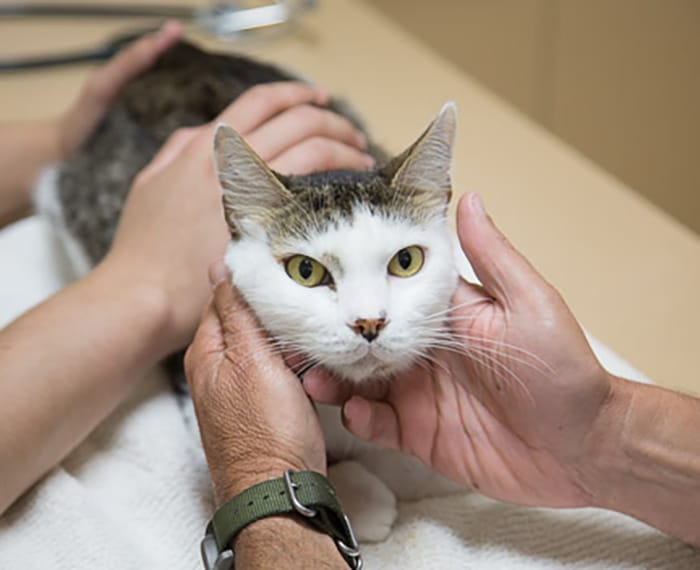
This cat is getting its submandibular lymph nodes palpated
We can teach you how to palpate these lymph nodes. Our In-Home-Exam Page has more details.
These symptoms are very similar to a cat that has FIP (Feline Infectious Peritonitis).
Diagnosis of Cat FIV
We diagnose FIV the same way we diagnose every disease, using a thorough approach.
The approach to testing for FIV is similar to that of FeLV, and follows the recommendations of the American Association of Feline Practitioners and Academy of Feline Medicine advisory Panel. Their testing recommendations are as follows:
- The FIV status of every cat should be known
- This test should be repeated at least 60 days later when introducing a new cat into your household, while limiting exposure to other cats.
- Yearly testing should be performed on every cat that goes outdoors or has exposure to an FIV positive cat
- Every sick cat should be tested, regardles of previous test results
- Every cat should be tested prior to entering a new household, whether or not they have other cats
- When test results are negative but a recent exposure is possible (ex.-a cat that fights and has wounds). These cats should be tested at least 60 days after the last potential exposure to allow time for the cat’s immune system to develop antibodies and show up as a positive test.

Our routine feline blood panel checks for FIV every time. This is very important due to the variable nature of the immune system and the constant monitoring needed in this disease.
Our in-house test kit that checks for the FeLV also checks for the FIV virus. It is a screening test for antibodies to the virus. If it comes back positive then a confirmation test called the Western Blot test is needed to verify the diagnosis. On occasion false positives can occur, so this verification test is important.
Kittens up to 12 weeks of age, that have circulating FIV antibodies from nursing their mothers, might also test positive. They will return to a negative state several months later, so they should be retested at 60 day intervals to make sure.
A cat that tests negative, but is exposed to an FIV positive cat, should be retested in 8 weeks.
A cat that tests positive might be a carrier, and not show any symptoms of this disease for many years, if at all.
If the test comes back negative there is minimal chance a cat has FIV. Since it takes 2-3 months (at least) for antibodies to show up in the bloodstream once a cat gets infected by a bite wound, theoretically it is possible that this is going on when a cat is tested negative. Also, in the later stages of the disease, when cats are actually showing severe symptoms, the test can be negative. This is because the immune system is so depleted at this point that it can not make adequate antibodies to fight the disease, hence there are no antibodies circulating in the bloodstream for the test to detect.

The 2 blue dots indicate a positive FIV test on our in-house test

This same cat was postive on its Western Blot test to confirm that is has FIV. Notice the age of this cat on the top line of the form.
PCR (Polymerase Chain Reaction) test can be helpful because it tests for viral DNA, and is not dependent on antibodies from the immunes system, which can vary. In spite of this, there can be false positives and negatives, so more information and standardization among laboratories is needed before this test will be used routinely.
FIV Cats Treatment
There is no medication that will kill this virus. Treatment is aimed at keeping the immune system as strong as possible and utilizing medication as needed. Fortunately, the disease progresses slowly, and cats can remain healthy for several years,sometimea a lifetime, after being positively diagnoses. Do not euthanize a healthy household cat that lives by itself just because it has FIV.
FIV positive cats that are not showing any of the associated signs of illness should be examined every 6 months at least. Routine blood panels, worm checks, and urine samples should also be performed every 6 months to monitor for changes that should be treated.
Treatment of FIV revolves around the organ or organs that are most affected. This means we routinely will use antibiotics and immune simulators. Your doctor will let you know if this applies to your cat. Gum and mouth infections are treated by keeping the teeth clean and the use of oral antibiotics. As with any disease, good nutrition, routine preventive medical care, along with plenty of TLC, are mandatory for a good quality of life. There is no evidence that shows treating cats that are positive for the FIV test, but are not yet showing symptoms, is of any benefit on the health or longevity of these cats.
Since this disease suppresses the immune system in a manner similar to FeLV, therapy is similar. You can find this therapy in the FeLV page. The same caveats apply to both diseases in the use of these medications. Treatment times for both FIV and FeLV cats tends to be longer than cats that don’t have these viruses. In addition, the use of human AIDS medications have potential to help, but they have greater side effects and are considered experimental. also, their cost precludes their use in most budgets.
These cats are also susceptible to food borne bacterial and parasitic diseases due to their immunosuppression, so do not feed them raw or unpasteurized foods.
All FIV positive cats should be kept indoors to prevent transmission to other cats.
An FIV positive cat should be checked for internal parasites (worms) at least every 6 months. These worms weaken the immune system, which is the last thing we need in this case.
How to Prevent Aids in Cats
This virus will not survive long in the environment. Still, keeping your cats environment clean, and routinely using bleach to disinfect feeding bowls etc., makes sense.
Only introduce new kittens into your household if they are healthy, free of internal or external parasites, and are current on their vaccines. The best method of preventing FIV (this also applies to the FeLV) is to prevent exposure in the first place. FIV control is aimed at preventing exposure. It is best to keep cats indoors, neuter male cats to reduce fighting and avoid introducing stray cats into a household without prior FIV testing. Also, one should segregate FIV positive cats from uninfected cats.
A vaccine was developed years ago, but it was rarely used. A major disadvantage to the vaccine is the fact that a cat that gets the vaccine will test positive on routine FIV testing for at least one year. Any cat given an FIV vaccine should be identified by a collar or microchip.
FAQ’s
1) How is FIV transmitted?
It is spread through the saliva when a cat is bitten.
2) Can I get aids from a cat?
Human beings cannot get AIDS from cats.
3) Can cats get aids or HIV?
Not from human beings
4) Is feline FIV contagious to other cats?
Yes, if they are bitten by a cat with FIV