

This page has two sections:
- Causes of heart disease
- Symptoms of heart disease
Cause of heart Disease
There are several factors, usually working in combination, that lead to cardiac disease:
Bacteria
They can buildup on the heart valves inhibiting their ability to flow blood in the proper direction through the heart. In almost all cases in dogs and cats this is from dental disease.

This is periodontal disease in a cat. The bacteria that are in the inflamed area of the gums are in the millions, and can spread to the bloodstream and go to the heart valves.
Virus
They can directly affect the heart muscle (myocardium), causing cardiomyopathy. In the early years of parvo virus there was a form of the disease that attacked the myocardium and caused rapid death. It was called peracute, because the puppy died soon after it started crying in discomfort.
Amino Acids
Taurine, an essential amino acid in cats, can lead to dilated cardiomyopathy. Humans and dogs can produce taurine naturally (non-essential) and do not need it in their diet. A deficiency of taurine in the cat will also cause degeneration of the retina. Taurine was not included in adequate amounts in cat food many years ago.
This problem has been corrected in almost all commercial cat foods, so we rarely see this problem anymore. Please see our Nutrition Advice page for much more information.
Hypothyroidism
An inadequate amount of the thyroid hormone thyroxin can predispose a dog to heart disease. This problem is diagnosed with a blood sample and corrected with thyroxin hormone replacement. This problem is almost exclusively seen in dogs.
Hyperthyroidism
This cat problem occurs when the thyroid gland has a tumor and secretes excess thyroid hormone (thyroxin). You can learn about it in detail in our hyperthyroidism page. In this disease the heart is racing as it tries to keep up with the increased metabolic rate of the organs as they respond to the increased thyroid hormone.
Valve Disease
Congenital abnormalities of the heart valves, usually a problem in young dogs, can lead to significant heart disease. These can include any of the valves. We get an indication of this early in a pets life by the presence of a heart murmur. Young animals can have what are called “innocent murmurs”. These are heart murmurs that don’t cause any problems and eventually resolve. If these murmurs persist, are of high intensity, or the pet is ill, they should be pursued further with diagnostic tests.
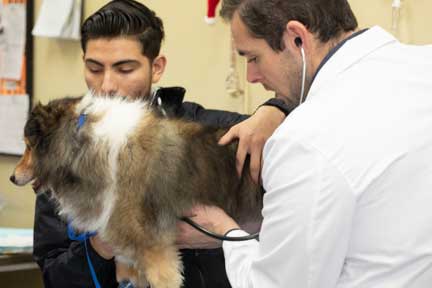
Heart murmurs are diagnosed with a stethoscope. One of our student externs is learning about the three heart valves that can be ausculted on the left side of the chest. The three valves are the pulmonic, aortic, and mitral valves.
Older dogs get a problem with heart valves that also can be significant. The most common valve to have a problem in older dogs and cats is the mitral valve. We will go into this in more detail soon because it is the most common cause of heart disease in the dog.
High Blood Pressure
This tends to be secondary to some diseases, most notably kidney disease and hyperthyroidism. We have a page on hypertension (high blood pressure) that goes into this problem in more detail.
Drugs
Some drugs are toxic to the heart. It is ironic that one of the drugs used to treat heart disease years ago, called digitalis, can be toxic to the heart also. This drug was commonly used to help slow down a racing heart. When used, we monitor digitalis levels with electrocardiograms and with a blood sample at least every 6 months to make sure it does not go into the toxic range. With the advent of new and better drugs we do not use this drug any more.
Trauma
A heart that receives a severe blow can have problems with adequate pumping of blood or the normal electrical beating.
Parasites
The heartworm parasite (dirofilaria immitis) can cause severe heart disease. This problem is not uncommon in dogs, and has been diagnosed with increasing frequency in cats lately. Prevention is the key, and most flea and parasite control products also prevent heartworm. An ounce of prevention is worth well over a pound of cure here, so keep your dog and cat on these flea/parasite/heartworm preventative treatments year round.
Lung Disease (cor pulmonale)
Problems with hypertension in the lungs can cause the right heart to fail. These problems can include cancer, heartworms, infections, trauma, toxins, hypothyroidism, and Cushing’s disease.
Metabolic Disease
When vital internal organs like the kidney and liver are diseased there can be many changes that effect the heart. These include electrolyte abnormalities, calcium irregularities, and waste product buildup.
Toxins
Some poisons selectively target the heart. Curare, the drug used in the tips of poison arrows and darts, is one of these drugs.
Symptoms of Heart Disease
Typical symptoms of cardiac disease include:
- lethargy
- poor appetite (anorexia)
- coughing- initially caused by an enlarged heart pushing upwards on the mainstem bronchi (windpipe) when the left atrium enlarges. As time goes on, this coughing is exacerbated by fluid buildup in the lungs (pulmonary edema).
- passing out (syncope)
- weakness
- difficult breathing (dyspnea)
- distended abdomen (especially if the right heart is diseased) called ascites
- pale or bluish colored gums (cyanosis)
- racing heart (tachycardia)
These symptoms are found in many other diseases also, especially of the respiratory tract. To determine which disease is causing these symptoms we need to strictly adhere to the diagnostic process.
In some heart diseases, notably cardiomyopathy in cats, there might be no symptoms prior to a sudden death. These cats seem fine until a stress causes their diseased yet compensating heart to reach its limit.
Continue on to:
How we Diagnose Heart Disease
Go back to:
Vascular Anatomy & Physiology
Heart Anatomy and Physiology
Causes and Symptoms of Heart Disease
Heart Disease Overview Page
Diseases List Page