

This disease is sometimes called Rabbit Gastrointestinal (GI) Syndrome, abbreviated as RGIS. Like many diseases, its cause is multifactorial, and includes anorexia (not eating), gastric ulcers, and intestinal hypomobility (intestines do not move food along in normal peristalsis).
Gastrointestinal stasis is a common cause of digestive disease in rabbits (lagomorphs). In most cases at our hospital the cause is a diet that is too low in fiber. You will sometimes read the term “ileus” when talking about this disease. Ileus occurs when the normal intestinal movement of food through the intestines, called peristalsis, stops. Normal digestion is dependent on normal peristalsis of the intestines. Peristalsis is the movement of ingesta down the stomach and intestines. When this stops GI stasis is the result.
Sometimes a hairball (also called wool block or trichobezoar)) is considered a part of this disease. In reality, over many years of treating rabbits we have learned that any hairball in the stomach is a result of GI stasis and not the cause of it. Ingesting hair is a normal part of a rabbits life, and when fed the proper food this small amount of hair passes through the digestive tract normally.
Digestive Physiology
Herbivorous animals like horses, rabbits, deer, cows, antelopes etc., obtain their nutrition by digesting food that carnivores cannot. A lot of this food is made up of cellulose. Neither carnivores or herbivores contain the enzymes necessary to digest this cellulose. The secret that herbivores have that allows them to digest this usually undigestible food lies in bacteria that reside in their GI tract.
Some herbivores are called foregut fermenters. This means the bacteria that help these animals digest cellulose reside at the beginning of the digestive cycle. Sometimes this occurs in the rumen, one of the so-called 4 stomachs in a cow. These stomachs are actually large fermentation chambers that contain the bacteria that can digest cellulose. Examples of this cellulose are hay and grasses.
In this anaerobic environment, the bacteria consume the plant material for their own metabolic needs and, as a result, produce end-products of fermentation called volatile fatty acids (VFA). Additionally, the fermenting bacteria use nitrogen from plant material to produce amino acids and protein which can then be used by the animal. Once these bacteria digest this cellulose they produce volatile fatty acids (VFA’s) and amino acids. These nutrients are absorbed as they pass through the small intestines and into the large intestine.
In contrast, hindgut fermenters store these bacteria in the cecum (appendix) and large intestine. In the case of the rabbit, there is a complex interaction between the colon and the cecum(appendix) that gets this bacterial fermentation process started. The VFA’s and amino acids that are now the end product of bacterial metabolism pass into the large intestines and out the body. They do not get a chance to pass through the small intestines because of their location, and as a result, less nutrition is absorbed by the herbivore.
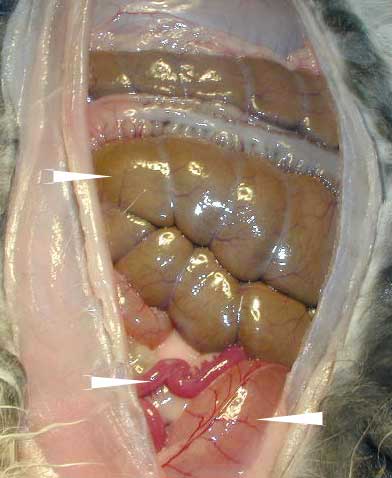
Here is a picture of the cecum taken during a routine necropsy of a rabbit. The top white arrow on the left points to just one of the 4 horizontal folds of this rabbits cecum. As you can see, it is huge and takes up a large amount of the abdominal cavity. For perspective, the arrow on the lower left points to the uterus in this female rabbit, and the arrow on the lower right points to the urinary bladder.
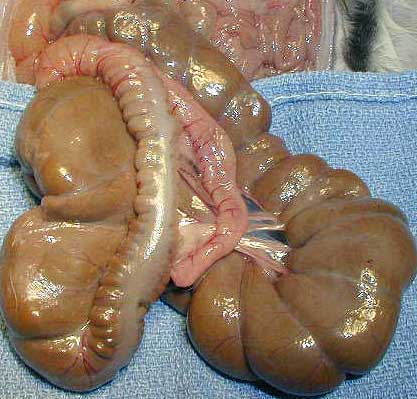
Another view with just a part of the cecum outside of the abdomen. Notice how the cecum has folds.
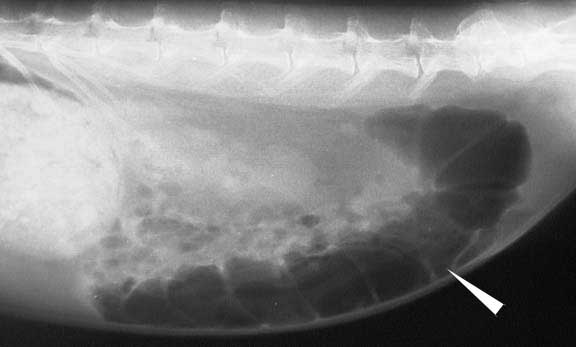
Here is an x-ray view of the abdomen of a rabbit. This rabbit is laying on its right side, and the head is towards the left. The cecum is that long and horizontal dark object at the bottom. It is dark because it is filled with gas from the digestive process. The white arrow points to it. Notice also the folds that can be seen radiographically.
Hindgut fermenters have a problem that foregut formenters do not. As we mentioned earlier, since the bacteria are in the cecum they are at the end of the digestive system in the rabbit, and thus there is very little intestines to absorb the volatile fatty acids and amino acids produced by the bacteria before they get excreted by the body. The walls of the cecum can absorb some of the VFA’s that are produced. There is not enough intestine though to absorb the proteins and amino acids.
To get around this rabbits have evolved a sophisticated form of coprophagy (eating feces). In essence, and usually at night (they are sometimes called night droppings), the rabbit literally puts it mouth by its anus and eats some of its fecal matter. This literally brings the nitrogenous proteins and amino acids to the beginning of the digestive tract where they can get absorbed much more efficiently. Usually these droppings are soft in nature and are not the same firm and dry droppings you normally observe in abundance from your rabbit.
This whole system in the rabbit is designed around a high fiber (cellulose) diet. This is why feeding concentrated rabbit pellets is not healthy, and can lead to a shut down of this whole digestive process. This will lead to GI stasis and the potentialf or serious disease, pain, and even death in a rabbit.
Pathophysiology
As the intestines slow down food and hair can become stuck, leading to pain and a further slow down of the intestines (called ileus). A hairball can now form in the stomach adding to the problem. Harmful bacteria can now produce in great quantities and cause the intestines to fill with gas. They overwhelm the normal bacteria and can even produce toxins.
This intestinal distention with gas causes even more pain and further ileus. It becomes a positive feedback cycle until the rabbit stops eating and becomes weak and dehydrated. It is at this point most people bring their rabbit in for us to give medical care. This whole process can take anywhere from several hours to several days. It can be slow and insidious or acute and quite apparent that something is wrong. In any case you need to seek immediate medical attention for your rabbit.
In the past this disease was erroneously thought to be a hairball problem. It was treated surgically where we literally did a surgery to open up the stomach and remove the hair and ingesta that was present. Unfortunately, most of these rabbits did not do well postoperatively. As time went on and we learned more about this disease it became apparent that the hairballs were a result of the GI stasis problem and not the cause of this. SInce then we have treated this disease medically with much greater success. Success depends on how soon in the disease process we treat your rabbit.
What is Gastrointestinal stasis in rabbits?
In this disease the normal peristalsis of moving food through the GI (gastrointestinal tract) is impeded. This can cause serious consequences.
What causes GI Stasis in Rabbits?
There are numerous causes to this problem:
Dental Disease
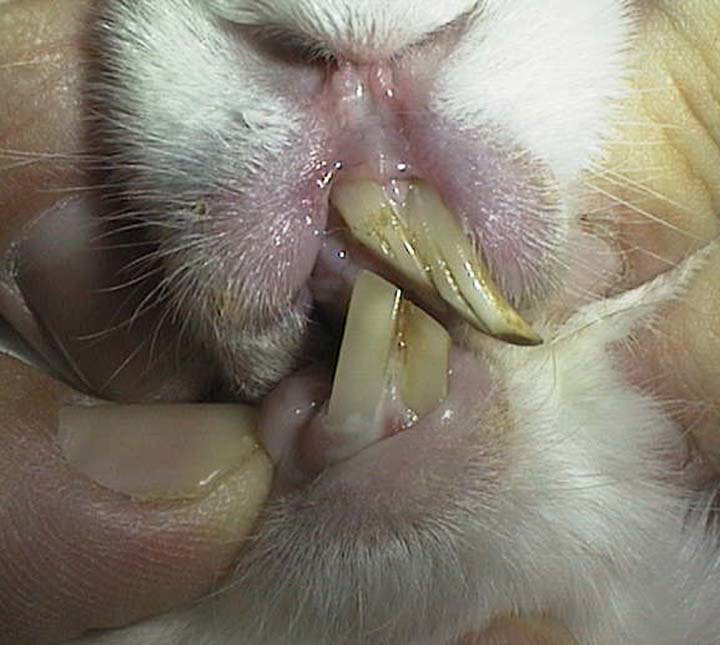
Rabbit teeth continuously grow. If their dental anatomy is imperfect an incisor or molar tooth can overgrow and prevent them from being able to chew their food. This will cause the GI tract to stop working and lead to stasis. Our Dental Disease link can give you examples of overgrown teeth.
Click here to learn more about rabbit tooth problems
Adhesions from prior abdominal surgery
Probably the most common abdominal surgery performed on a rabbit is an OVH (commonly known as a spay). On very rare occasions the healing process can cause adhesions between the uterus and GI tract, making the normal peristalsis movements abnormal.
Infection
A sick rabbit can easily spike a fever causing it to become anorectic (not eating). When food is not continuously present in the rabbit GI tract is shuts down leading to GI stasis. Some infections (urinary tract or abscess) can cause pain, which will also lead to anorexia. Pasteurella, a very common rabbit infection, can also has the potential to lead to GI stasis.
Inappropriate use of antibiotics, especially home use with the wrong antibiotic at the wrong dose, can disrupt normal bacteria (called normal GI flora) and add to this problem.
Pain
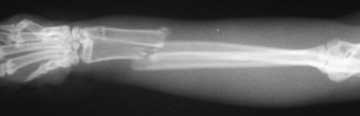
A rabbit that is in pain will become anorectic, which can lead to GI stasis. The pain can be from numerous causes like fractures, bladder stones, liver lobe torsions, infections, and after routine surgeries like a neuter. This is one of the reasons we perform this surgery with the laser, which dramatically decreases pain after surgery.
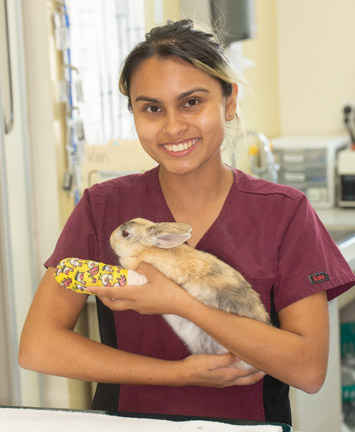
A severe fracture like this can be so painful your rabbit will stop eating. This fracture is in the front leg of a rabbit. Click here to see how we put a splint on a rabbit with a fracture similar to this.
Stress
Overheating in the summer time, food that is not fresh, new pets or environment, or sudden changes in diet can lead to so much stress that your rabbit stops eating. This rapidly leads to dehydration and GI stasis. In a household with more than one rabbit the separation of the rabbits can be stressful.
Intestinal blockage
This life-threatening condition can also occur in the disease.
Inadequate fiber in the diet
This is the cause we see most commonly in our hospital. Your rabbit should be fed grass hay like timothy hay along with dark leafy greens. It should be feed minimal to no concentrated pellets, and these pellet should contain at least 25% crude fiber. These pellets were originally formulated for convenience and for breeding rabbits that needed the concentrated energy. High fiber in the diet helps to properly wear down the rabbits teeth that grow continuously through life.
Abrupt diet changes, a diet with too many carbohydrates and fat, and a rabbit that is not drinking well, are also causes.
Other diseases and factors
Rabbits have a small and non-distensible pyloric sphincter and cannot vomit. Liver disease (hepatic lipidosis and cholangiohepatitis), kidney disease, viral infections, and cancer can all be involved.
Symptoms of GI Stasis in the Rabbit
Symptoms can be subtle and easily missed, especially at the early stages. The two primary symptoms to watch for are complete or partial anorexia (lack of appetite) and a diminished amount of droppings. Sometimes these droppings will be quite dry and firm, other times diarrhea might be present.
Other symptoms could be lethargy, weight loss, abdominal distention, and signs of discomfort when you pick up your rabbit or touch it. Bunnies that are painful will grind their teeth, stamp feet, or be hunched . They might start eating strange objects (called pica) like paper and wood to increase the fiber in their diet. They also might drink less (oligodipsia). In cases of acute obstruction shock and even death are possible.
Rabbits are eating machines, and should look like this most of the time
Please keep in mind that GI stasis can occur simultaneously with other diseases, especially when these other diseases are the cause of the problem. We discussed some of these causes earlier.
Diagnosis
This is not a disease you should diagnose at home and then try a home remedy. This is because other diseases can mimic GI stasis, other diseases can be occurring simultaneously, and also because by the time you notice a problem the disease is already well entrenched. The longer you wait for an accurate diagnosis the poorer the prognosis becomes.
Our diagnosis of GI stasis follows the diagnostic process like it does for all our patients. You might want to link to the diagnostic process to learn about it before continuing on GI stasis.
-
Signalment
GI stasis tends to occur in middle aged and older rabbits of any gender. even though it would seem that long hair rabbits would get this problem more often than rabbits with shorter hair coats, that is not the case with most rabbits.
-
History
Rabbits with this problem tend to be fed a diet that does not have enough fiber. There might be a history of prior surgery, trauma, or a stress related episode like boarding your rabbit in a strange environment. Maybe a home medication was used that disrupted the normal bacteria in the intestines (GI flora).
-
Physical Exam
Our doctors perform a thorough exam to determine the exact nature of your rabbits problem. This is important since other diseases can mimic GI stasis. We will weigh it and take its temperature as a start. Rabbits with a low body temperature (hypothermia) of <100 degrees F, on initial examination are more likely to die.
- We will check the molar and incisor teeth carefully for any problems. We will check lymph nodes and palpate the abdomen, along with checking the heart with a special stethoscope for small animals. We will also determine your rabbit’s state of hydration.
- When our exam is completed we will give you an assessment of your rabbits condition and review all the potential disease that might be affecting your bunny.
-
Diagnostic Tests
Routine tests include a blood panel, urinalysis, and fecal exam for parasites. It is also common to take a radiograph to check for other problems and confrim the diagnosis.
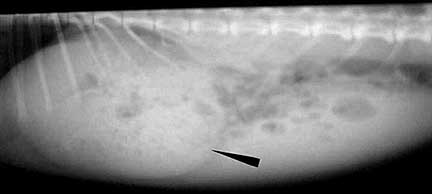
This is the radiograph of the abdomen of a rabbit that is laying on its right side. The arrow is pointing to a round stomach filled with ingesta. This could be normal food or it could be the result of GI stasis. If this rabbit has a history of not eating for several days then it increases the probablity of GI stasis.

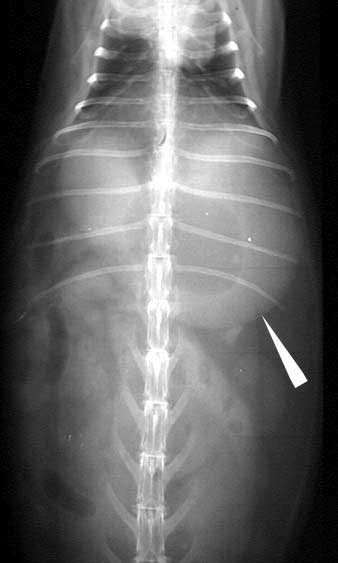
Different rabbit, different view. This rabbit is on its back, with the head at the top, arrow pointing to the stomach. The dark area at the top on each side is the lungs that are in the thorax. Everything below this dark area is in the abdomen. Notice how large this distended stomach is. This has the potential to be a GI stasis problem just like the radiograph above.
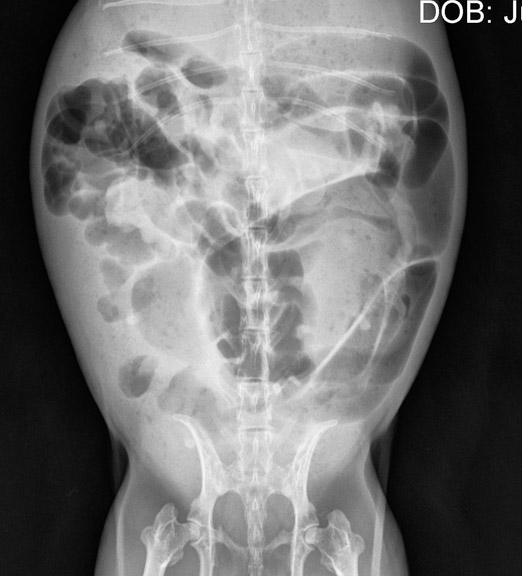
Some rabbits have a large amount of gas and are very painful. All of the dark areas in this radiograph are gas distended intestines.
If one of our doctors suspect more than GI stasis he/she might want further diagnostic testing. This might include special blood titers and ultrasound.
Rabbit GI Stasis Treatment
Many treatment recommendations are based on expert opinions as opposed clinical research, and not every treatment option will work on every rabbit with GI stasis.
We rarely if ever use surgery as an option since medical management has proven to be superior. If surgery is indicated, for example a rabbit with a severe intestinal obstruction, the rabbit is oftentimes too ill for anesthesia and surgery.
Most cases are treated in our hospital. These rabbits need medication and nursing care, at least initially, that can only be properly performed by our technicians. Some rabbits respond well in 1-2 days and start eating and producing droppings. Others can take 1-2 weeks to get back to normal function. Patience is importance because the rabbit GI tract is sensitive and overzealous treatment can do more harm than good.
The first and most common sense thing we do is to warm up a rabbit that is hypothermic. Ever that we start treating with medications:
-
Fluids
Many of these rabbits are dehydrated and need fluids. This is one the most important treatment modalities for this disease. We give them orally, intravenously or subcutaneously. The fluids replace electrolytes, provide vitamins, and rehydrate your rabbit. Rehydration is important in general for any sick animal, and is especially important in GI stasis to help with normal peristalsis and movement of ingesta through the intestines.
-
Assist Feeding
The GI tract needs to get back to normal function asap. The lack of food will shut down the GI tract with serious consequences that can lead to death. As we are rehydrating we will also assist feed special food called Oxbow Critical Care. This stimulates the peristalsis movement of the intestines, and adds badly needed nutrients. We like to start this assist feeding after rehydration and also after radiographs assess gastric size so that we do not rupture a distended stomach.
-
Feeding a proper diet
We give timothy hay (prairie and oat hay are OK) along with dark green wet vegetables like Kale. The fiber and moisture present in this food is an aid in getting the intestinal peristalsis going again. They need a diet that is around 15% crude fiber and 16% crude protein. Supplements to hay are strawberries, apples, dandelion, mustard greens, parsley, carrot tops, broccoli, melon, oranges, mango, tomatoes, and kiwi.
- Alfalfa hay is not recommended because of excess calcium and protein. Please see our page on hypercalciuria to see why excess calcium is detrimental.
-
Medication to stimulate the intestines
The two primary medications used in rabbits to stimulate the intestines back to normal peristalsis are Cisapride (Propulsid) and Reglan (metoclopramide). They are what is called “pro kinetic” agents because they help move the food along. They can be highly highly beneficial and are used in most cases.
-
Pain medication
These rabbits are in significant pain due to the distention of the intestines. This pain needs to be addressed if they are to begin eating again. Typical medications include opioid pain killers like buprenorphine and the NSAID Metacam (meloxicam).
-
Antibiotics
Antibiotics are sometime used. If we determine your pet has an infection from its lab data or physical exam we will put it on a broad spectrum antibiotic. Common organisms the proliferates in the cecum in GI stasis are E. Coli and Clostridium.
-
Anti gas medicine
If there is more gas in the intestines than is normal there is anecdotal information that simethicone might help diminish it. This gas can make the problem worse and will cause pain.
-
Miscellaneous medications
In the quest to help rabbits suffering from this problem various other medications have anecdotally been recommended. They are of questionable value, an include laxatives, pineapple juice, antibiotics (unless the blood panel or a culture indicates it), and probiotics.
-
Veterinary Neuronal Adjustment (VNA or VOM)
We have been using VNA to alleviate pain and help pets with gastrointestinal problems for 20 years. This has been a tremendous help to treat pets without adding any additional drugs to the treatment regimen. Click here to learn much more about VNA.
-
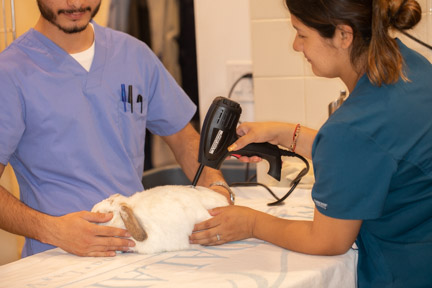
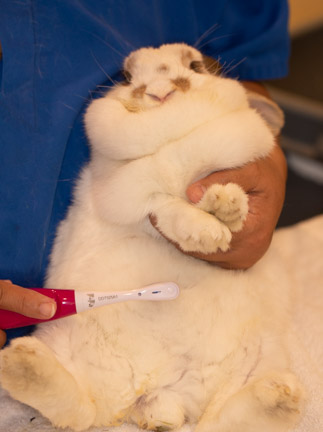
Electric toothbrush treatment
This treatment helps rabbits that are painful from distended intestines. The gentle vibration helps alleviate some of the pain.
It is obvious to us that they love this because they just lay there and don’t move
Treatment of rabbits with a suspected intestinal obstruction
This is a serious problem that can lead to death. It is partly because rabbits are unable to vomit. This causes gas distention in the intestines to worsen and prevent peristalsis. The gas distention in the intestines also decreased the blood flow back to the heart, leading to shock, pain, and death.
When severe enough we pass a gastric tube to release the gas and minimize the distention.
Once a rabbit is eating on its own partially and producing droppings we will send it home. We might use some of the medications described above. We will all send home Critical Care food to make sure it is taking in nutrition as it convalesces.
-
Treatments we do not do
Some treatments have the potential to make the problem worse. Probiotics and yogurt have milk starches and sugar that can feed the Clostridium bacteria. Lactobacillus has not been shown to be of any benefit, and if it is stressful to give this orally to your bunny could actually be detrimental. The same applies when you try to feed your rabbit “night droppings”. The proper word for night droppings is cecotropes. Hairball remedies can also cause a problem. The enzymes in pineapple are unable to dissolve a keratin mass in the stomach, and might even provide the Clostridium with sugar so it can keep on proliferating in the cecum.
-
Home Care
Once your rabbit is eating and producing droppings in increased frequency, and if the lab data is normal, we will send your bunny home with you to finish the nursing care. Our doctors will tell you what to do and our staff will demonstrate how to administer this home care. We are always here to help you, and if you cannot do it we will continue to hospitalize your bunny or treat it on an out-patient basis.
If you have other rabbits at home let them interact together as long as you can monitor the eating habits and droppings of the sick one.
Prevention
Minimizing stress (heat, overcrowding), proper diet (high in timothy and other grass hays, minimal pellets), a clean environment, fresh drinking water at all times, can be a substantial help in minimizing this serious problem. Do not let your rabbit become obese. Bring your rabbit in for an exam at the earliest sign of any problem with appetite or droppings.
To learn more about rabbits in general, and to help prevent a problem like this in your rabbit, visit the House Rabbit Society website. The National Library of Medicine also has information- https://www.ncbi.nlm.nih.gov/pmc/articles/PMC7258705/
FAQ’s
1) How long does it take for a rabbit to recover from GI stasis?
In mid cases they can recover in 1-2 days. In the more severe cases, the ones we encounter most often, it can take up to a week or more for full recovery.
2) Is GI stasis contagious to other rabbits?
It is not contagious to other rabbits
3) Can a rabbit’s breed affect their susceptibility to GI stasis?
Breed does not have an influence on GI stasis
4) Can GI stasis be fatal if left untreated?
Yes it can, that is why at the first signs of diminished droppings or poor appetite, your rabbit should be brought in to us for an exam.