

Introduction
This page shows two snakes that are constipated, called a Snake Impaction. The first one required surgical removal of the impacted feces (fecalith). The second died and was necropsied.
The symptoms of an impacted snake are a lack of appetite along with lack of bowel movement for many weeks. This is a serious condition that could result in the death of the snake if not treated, which is exactly what happened to the second snake.
Medical therapy, consisting of warm water baths, lubricants, and fluids have not helped at all. Surgery is a last resort in these cases because of the potential for post operative complications.
You can learn more about our standard of care of sick reptiles from the Association of Reptile and Amphibian Veterinarians.
What is a Snake Impaction?
A snake impaction is when a snake is filled with feces and cannot have a bowel movement. Normal ingesta cannot pass, and peristalsis is slowed down or stopped. It is a severe form of constipation and can lead to death if not treated.
Causes of Constipation in Snakes
Dehydration is a common cause, allowing a urate plug to stop the flow of food. This dehydration comes from an enclosure where the humidity is too low, the snake cannot soak in a water bath, and the temperature is too low.
Other causes are food items that a snake does not normally eat like towels or the substrate from its cage or terrarium.
A cage or terrarium that is too small doesn’t not allow the snake to move in a natural fashion, thus preventing the normal flow of food by intestinal motility.
Symptoms of a Constipated Snake
A constipated snake is usually bloated, lethargic and not eating. It might even be regurgitating its food. Since food cannot pass it is not having any bowel movements, or at the least, is straining to defecate.
Diagnosis of Snake Impaction
This diagnosis is made by history of a snake with the above symptoms, along with a physical exam where a bulge might be palpated. The definitive diagnosis is made with a radiograph where you can see the impacted area.
Treatment of Snake Impaction
In some cases we might be able to give a lubricant by feeding tube, warming it up, rehydrating with the fluids, and even massaging the area to get it to pass. Placing it in warm water to soak for 15-30 minutes daily can be a big help in some cases.
Many times, by the time we see it, we need to go in surgically and literally clean out the impacted area of intestine.
Snake #1
Most snakes that are impacted will not be eating or passing any feces. We use radiography to help us in our diagnosis.
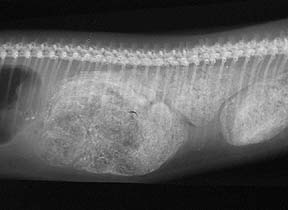
This is the radiograph of a Burmese python that has several fecaliths in its intestines. They are the large circular and whitish objects in this view.
Pre-anesthetic Treatment
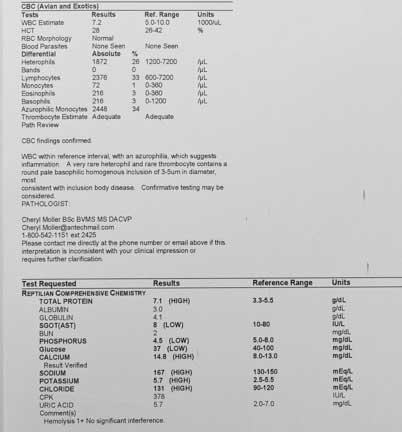
This snake needs to be anesthetized and the impaction removed. We like to make sure our patients are ready for anesthesia, so we take a blood sample to make sure there are no internal problems. That is easier said than done in a snake since they don’t have the routine external veins that dogs, cats, and those humanoids do.
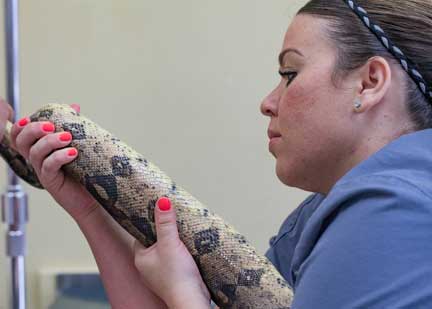
Can you guess where we get a blood sample from a snake from this picture? If you guessed the heart you got it right!
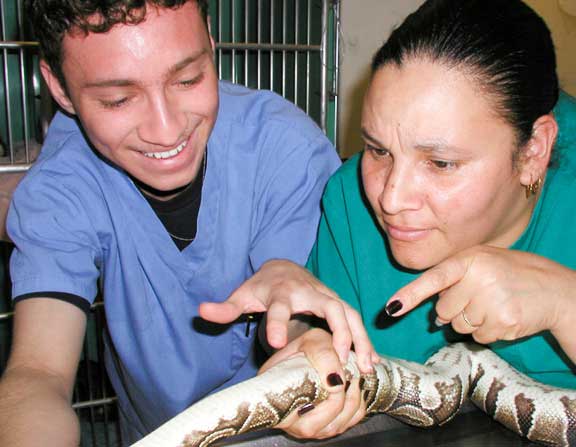
Sometimes it takes more than one set of eyes to find the heart. There have been many staff competitions on who can find it first, with the loser buying donuts!
You can see how it is done in this video.
Surgery
We anesthetized it and made an incision over the fecalith on the underside of its body.
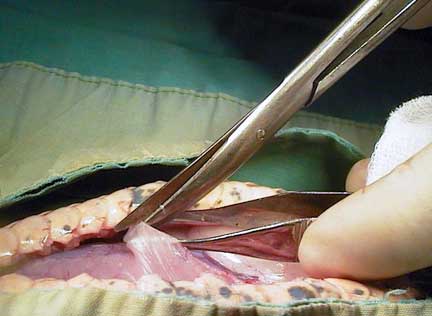
In this picture we are carefully dissecting through tissue to get directly to the intestines
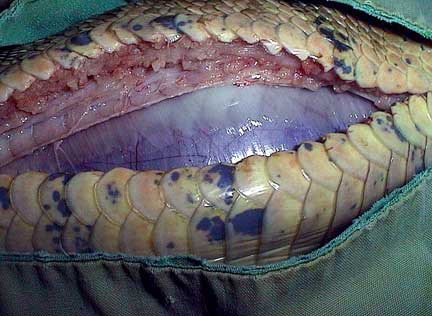
We have completed our dissection and have adequate exposure of the bulging intestine filled with hard stool
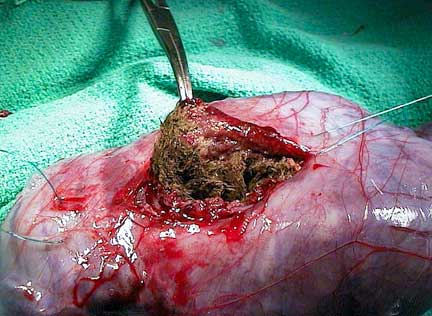
The intestine is brought out through the incision in the scales and two stay sutures (the blue sutures) are placed to allow gentle handling and placement. An incision has been made into the intestine and some of the dry and hard fecal material is being removed with a hemostat.
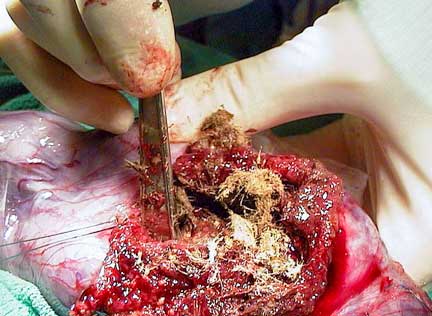
The feces is so hard it needs to be broken up before it can be removed

There is so much impacted stool in this intestine that we need a sterile spoon to scoop it out. We spend 30 minutes of this procedure scooping stool out of intestines.
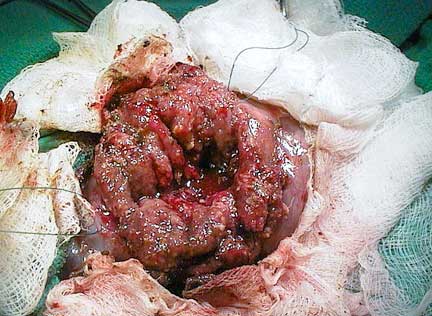
This is the appearance of the inner lining of the intestines (called the mucosa) after all the feces have been removed. It is inflamed and fragile, and is a major part of why this snake is ill.
Snake #2- Necropsy

You can see the subtle bulge in its posterior coelomic cavity in the very center of this picture

A radiograph confirms the impaction

The necropsy gives you a complete picture of the impaction
Prevention
This cases illustrate the importance of proper husbandry and observation. If these snakes had been kept in an enclosure with adequate humidity and temperature there is less of a chance that this problem would have occurred. In addition, if they had been brought to us sooner we probably would have been able to treat this problem medically.
This brings up the importance of daily observation of reptiles concerning normal health parameters like appetite, activity level, and bowel movements. Reptiles do not show obvious signs of disease like mammals, so careful observation of daily habits is important in order to notice subtle changes.