

Introduction
Tumors of the pancreas (insulinoma) can cause excess secretion of insulin, thus lowering the blood glucose (sugar) level to a point that a ferret can become ill. Unfortunately, this is a relatively common problem in middle aged and older ferrets, and is the most common neoplasm (cancer) in ferrets.
This tends to be a regional disease, and does not commonly occur in Europe, Australia, and New Zealand. This might be because their diet is low in carbohydrates, whereas the dry kibble fed to many ferrets in the U. S. contains up to 45% carbohydrates.
The end of this page has a short video on surgery to remove nodules from the pancreas.
What is Ferret Insulinoma?
In this disease the pancreas is involved and secretes an excess amount of insulin. The actual part of the pancreas that does this is called the pancreatic islet beta cells.
This is the opposite of diabetes mellitus in animals (sugar diabetes) and people, a disease where the pancreas secretes an excess amount of insulin.
Causes of Insulinoma in Ferrets
Like in many diseases, there are many factors, that when combined in unique combinations over a specific period of time, cause disease. Some of the following factors are involved with this disease:
- Obesity
- Age- over 4 years
- Gender- females maybe greater than males
- Lack of exercise
- Diet high in sugar and carbohydrates
- Genetic predisposition and lack of genetic diversity in the U. S. due to limited suppliers
Pathophysiology of Ferret Insulinoma
The pancreas secretes two hormones that regulate blood sugar levels; insulin and glucagon. It is the balance of these two hormones that maintains the blood sugar level appropriately as needed. When the blood glucose level increases rapidly, as can occur in a high sugar or carbohydrate diet, there is overproduction of insulin from the beta cells in the pancreas. A lifetime stimulation of these beta cells to produce excess insulin is suggested to lead beta cell neoplasia. In this state the beta cells are not responsive to varying levels of glucose, and secrete excessive insulin. This leads to a chronic hypoglycemia (low blood sugar level).
Symptoms
Some ferrets do not show any symptoms, while others exhibit lethargy and weakness. There might be a decrease in appetite and weight loss. These symptoms might even come and go over a period of months. This can progress to tremors, star gazing, mental dullness.
Some ferrets will have increased salivation (ptyalism) or pawing at the mouth, and even a glazed appearance to the eyes, and might even collapse or have seizures. Some ferrets have hindlimb lameness.
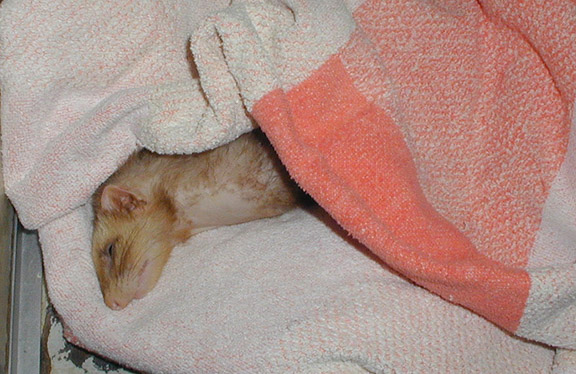
Some ferrets are very weak due to their low blood sugar

This is what we want them to look like; playful and getting into mischief!
There are many other causes to a ferret not eating besides insulinoma’s and adrenal disease, and we need to keep in mind dental disease as one of them since it is overlooked in ferrets. The gingivitis and periodontal disease that occurs in dental disease can make eating uncomfortable or painful, and needs to be addressed.

The three areas of gingivitis in the gums of this ferret are circled
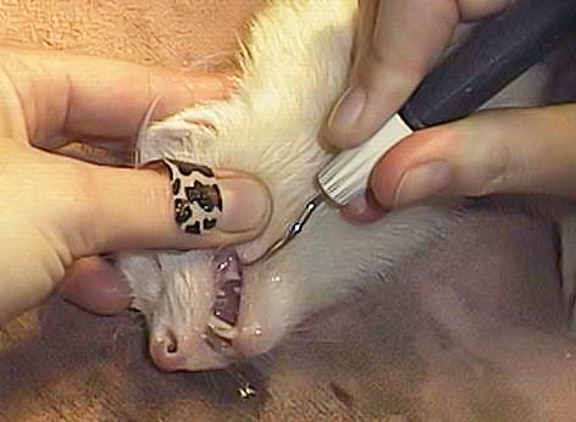
These teeth can be scaled just like we do in dogs and cats
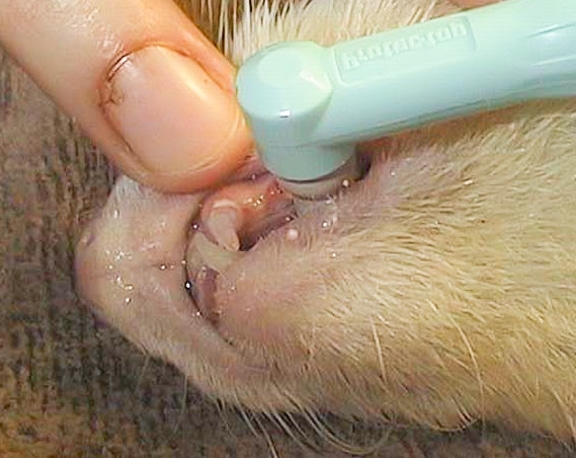
We even polish them
Dental disease is very prevalent, serious, and overlooked in most animals. Our Dental Page on this is comprehensive and highly informative.
Diagnosis
Some ferrets are diagnosed as having an insulinoma when an abdominal surgery is being performed for other reasons (adrenal gland disease, spay, liver disease). This is especially true for the ferrets that are not showing any symptoms of this disease. For those ferrets that are symptomatic of insulinoma, the diagnosis is made based on history, examination findings, and diagnostic tests.
We always follow the tenets of the Diagnosis Process in making this diagnosis. In ferrets these are the typical findings:
Signalment
This tends to be a disease of neutered male and female ferrets with an average age of 3 years. It be seen earlier and later than these age groups.
Symptoms
Symptoms of adrenal disease in ferret were described earlier in this page.
Physical Exam
Ferrets are fun critters to work with medically. They can be a challenge though when trying to listen to their heart with a stethoscope or perform some other detailed exam, due to their non-stop movement and curiosity.
We perform a complete physical exam on all our patients no matter what disease we suspect is causing a problem. This is particularly important in ferrets due to their great propensity to get other diseases besides insulinoma. This might reveal pale gums and heart murmur if there is a significant anemia.
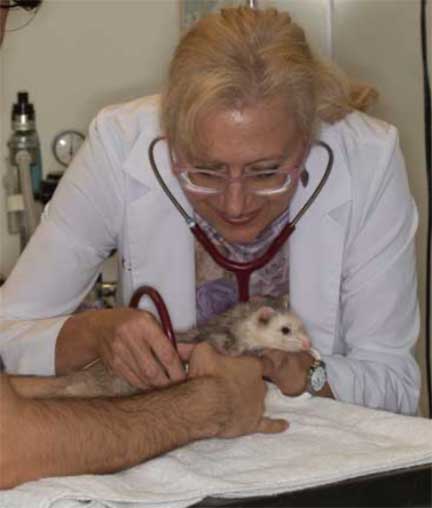
Dr. Kennedy and assistant trying to keep this ferret still long enough to listen to its heart
Blood Panel
A routine blood panel is performed on all sick ferrets. It is very thorough, and is called a CBC/Chem panel.
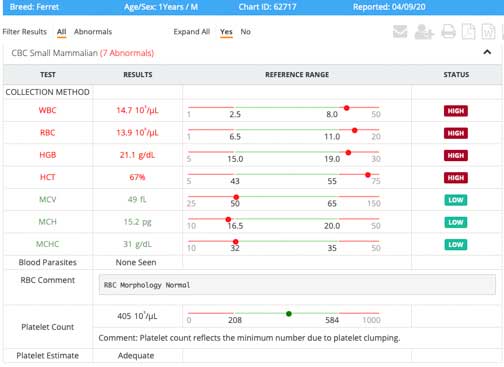
This is the CBC. The RBC’s are high, although this is not unusual in a ferret due to splenic contraction. This is considered normal if the ferret is not ill.

This is one part of the Chem panel. Note the normal Glucose of 150 milligrams per deciliter in this ferret. This is normal, an indicates this ferret probably does not have insulinoma.
Our laboratory has a special blood panel for ferrets that are exhibiting signs of insulinoma.The diagnosis of insulinoma is verified by a low blood glucose (sugar) level. A normal blood glucose level on this test ranges from 80-120 milligrams per deciliter (mg/dl). If a ferret has blood glucose of less than 60 mg/dl after a 4 hours fast then insulinoma is suspected.

We use a special instrument to check the blood glucose level that only requires a few drops of blood. If you have ever tried to get blood from a ferret you would understand the importance of being able to do this test with only a few drops of blood!
Other causes of low blood glucose include the following:
- Sepsis
- Starvation
- Liver Disease
Dietary Treatment
High sugar foods like candy, yogurt, and raisins need to be discontinued. The diet should consist of a low carbohydrate and high protein food that your ferret will eat. A lack of appetite in a picky ferret is detrimental and can trigger a low blood glucose level and compensatory insulin increase, the exact opposite of what we want.
Ferrets with insulinoma need food available at all times, and need to be coaxed to eat every 4 hours. They need to eat anytime there will be physical activity like playing and when waking up from a nap.
Some of the foods that have higher protein and lower carbohydrates include:
- Carnivore Care by Oxbow
- Ferret Archetypal by Wysong
- Natural Gold by Pretty Pets
- Evo Ferret Diet by Innova
Medical Treatment
Medical therapy can be effective at controlling symptoms, although it cannot cure the disease. Food should be fed frequently, and it should consist of cat food or ferret food. Stay away from high sugar foods that can stimulate the pancreas to secrete excess amounts of insulin and set the stage for a hypoglycemic (low blood sugar) episode.
Prednisone (cortisone) can be effective at controlling symptoms for several months to several years. It comes in a liquid or pill form, and is usually given twice each day, depending on what your veterinarian determines. It helps raise the blood glucose level without stimulating excess secretion of insulin like foods high in sugar. The dose or prednisone might need to be increased as time goes on.
Other medications like diazoxide can be used if prednisone is not effective. Another drug that might be used is octreotide. These drugs are more expensive and have the potential to cause vomiting and appetite loss. Your veterinarian will let you know if they are indicated in your situation.
A low blood glucose level can cause a release of excess histamine and excess stomach acid. This can lead to nausea (the drooling or pytalism mentioned in the symptoms section, along with a loss of appetite (anorexia). Anti nausea mediations like Famotidine (Pepcid) can be used in these cases.
Chemotherapy with doxorubicin can be used to destroy the pancreatic beta cells. This drug needs to be given intravenously, and a blood panel, EKG, and chest radiographs need to be analyzed before starting chemotherapy. The side effects of bone marrow suppression, kidney disease and heart toxicity preclude the use of this drug routinely.
If your pet has an episode of hypoglycemia it should be given Karo syrup, Nutrical, honey or other foods high in glucose to temporarily raise the blood glucose level. After giving a high sugar food return it its normal diet to minimize excess secretion of insulin in the long run.
If your pet has collapsed and is unable to swallow, rub a small amount of honey or syrup on its gums. Only use just enough to wet the gums and take care not to be bitten if your ferret is having a seizure.
Keep it warm at all times, and when it regains consciousness feed it its normal diet and bring it to the hospital immediately for an exam and blood glucose check.
Surgical Treatment
Younger ferrets or those that have adrenal gland disease simultaneously are candidates for surgery. Tumor nodules that are found on the pancreas are removed, helping to prolong survival time. In some cases we perform a partial pancreatectomy.
In spite of the fact that surgery is performed some of these ferrets will need medical management, although sometimes at a lower dose. Survival time is variable after surgery, ranging from months to years.
Several pecautions must be taken when this surgery is performed. Ferrets can easily become hypothermic (dangerously low body temperature) due to the anesthesia and the fact that their abdomen will be open during the procedure.
They can also become hypoglycemic due to the stress of the procedure. Special precautions are taken to help mitigate these problems. In addition to our expertise at anesthetizing a ferret with this problem, our veterinarians have decades of experience performing this surgery and do it rapidly.
Pre-surgical Preparation
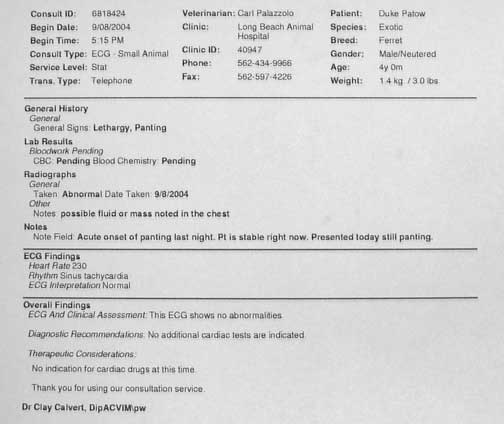
We perform a pre-anesthetic EKG to assess the heart. This ferret passed, with a heart rate of 230 beats per minute. This high heart rate for a human is normal for a ferret.
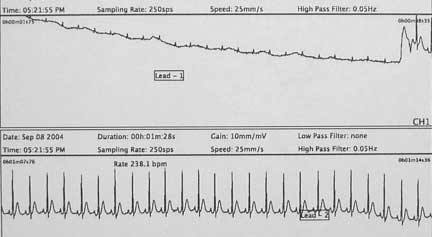
This is what a ferret EKG look like
If you would like to learn more about the fascinating world of heart diagnostics in animals follow this link and learn more about EKG’s, and even see one in action.
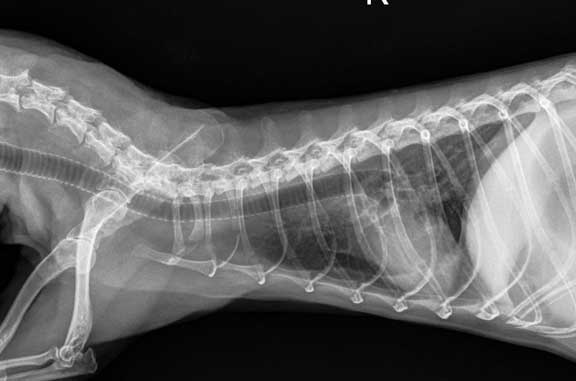
A pre-operative radiograph (X-ray) might also be taken if your doctor thinks it is indicated after the physical exam. The white structure in this chest radiograph is the heart, and the horizontal dark tube from left to right is the trachea (windpipe). This is where we put the breathing tube (endotracheal tube) when we administer oxygen and anesthesia.
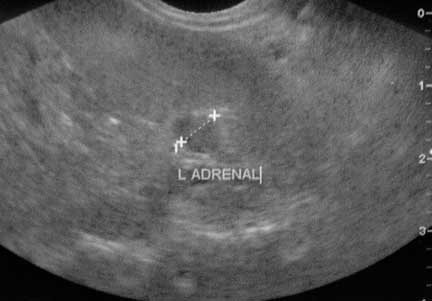
We will commonly do an abdominal ultrasound to look for other common ferret medical problems like cancer or Adrenal Gland Disease
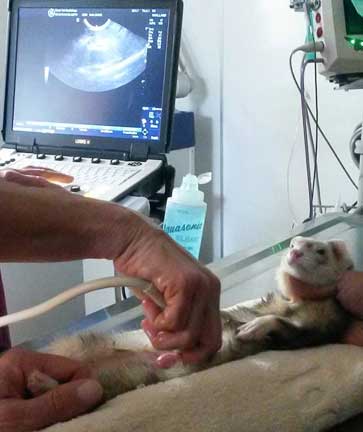
In case you are interested, this is how we do an ultrasound on a ferret
Surgeon Preparation
This is a sterile abdominal surgery, and our surgeon starts the pre-surgical process by using special soap to clean his hands.
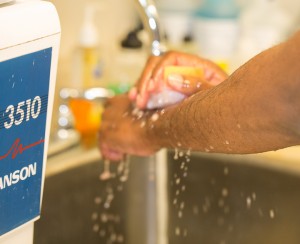
This is a sterile abdominal surgery, and our surgeon starts the pre-surgical process by using special soap to clean his hands
While our patient is being anesthetized our surgeon is already in our surgical suite setting up instruments. Our surgeon is ready to start before our patient is at a proper plane of anesthesia. Once the anesthetist gives the green light the surgery starts immediately. We want our surgeon waiting for his patient, not the other way around. All of this is to minimize anesthetic time.
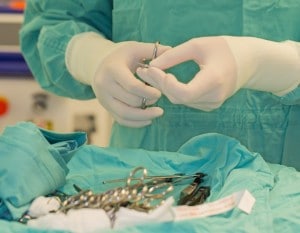
While our patient is being anesthetized our surgeon is already in our surgical suite setting up instruments.

Our surgeon is ready to start before our patient is completely prepped. Once the anesthetist gives the green light the surgery starts immediately. We want our surgeon waiting for his patient, not the other way around. All of this is to minimize anesthetic time.
Anesthesia
When everything is to our satisfaction we will administer a sedative. This will calm the pet down and make the administration of the actual anesthetic, along with post operative recovery, much smoother. Once a pet is anesthetized, prepared for surgery, and had its monitoring equipment hooked up and reading accurately, the surgery can begin.
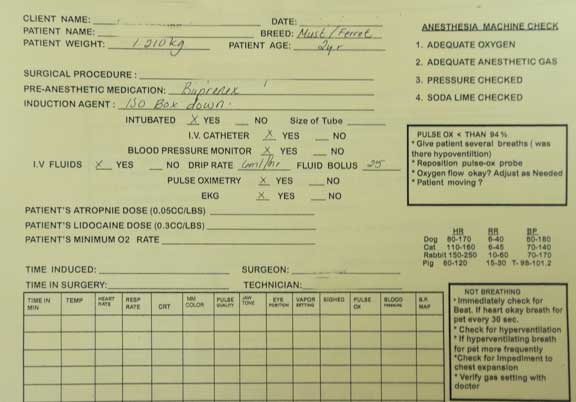
We use a detailed anesthetic form for every surgery
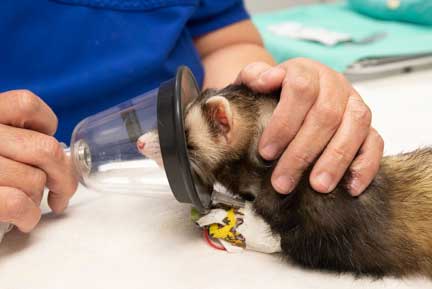
We initially administer anesthetic to our sedated pet via face mask
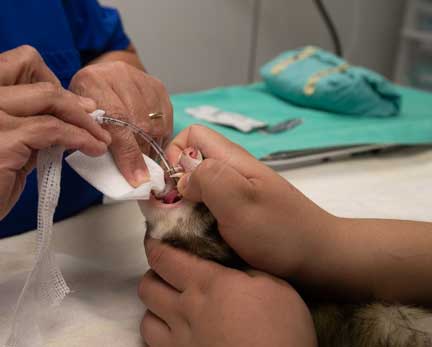
All our ferret surgery patients are then intubated for accurate administration of anesthesia and oxygen. You saw where this tube goes in the chest radiograph earlier in this page.
In ferret surgery pay particular attention to low body temperature (hypothermia) and low blood sugar (hypoglycemia). They are placed next to special hot water bottles throughout the procedure.

We keep a close tab on body temperature, before, during, and after surgery since they are prone to hypothermia
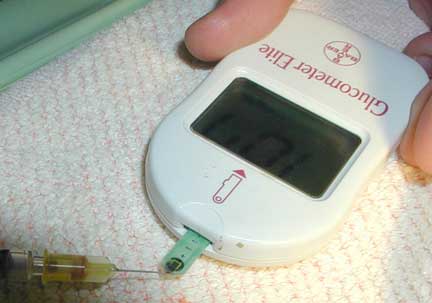
We also monitor the blood glucose levels during surgery since they are prone to hypoglycemia during the procedure
Our patients are carefully monitored to detect any abnormality before it becomes a problem. This early warning system is important in such a small animal that is ill and undergoing anesthesia and major surgery.

This machine monitors:
Temperature
Heart Rate
Heart rhythm
Oxygen saturation
Carbon dioxide level
Respiratory rate
We also carefully monitor oxygen saturation on our surgical patient with a special and small pulse oximeter
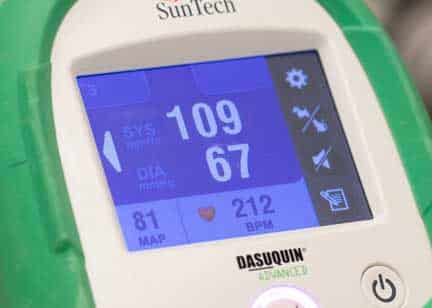
We constantly monitor blood pressure and heart rate. This ferret has a blood pressure of 109/67, and a heart rate of 212 beats per minute. This is normal for a ferret under anesthesia.
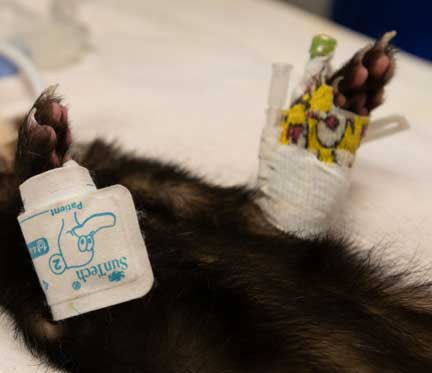
You can see the pediatric blood pressure probe on the right leg, and the IV catheter on the left leg, of this ferret under anesthesia
In addition to our monitoring equipment our anesthetist stays “hands on” in monitoring important physiologic parameters.
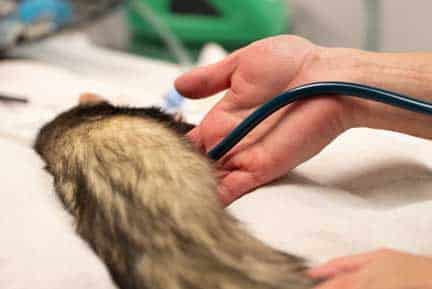
Our anesthetist has access to the patient at all times before, during, and after the procedure

Our surgeon and anesthetist work closely together
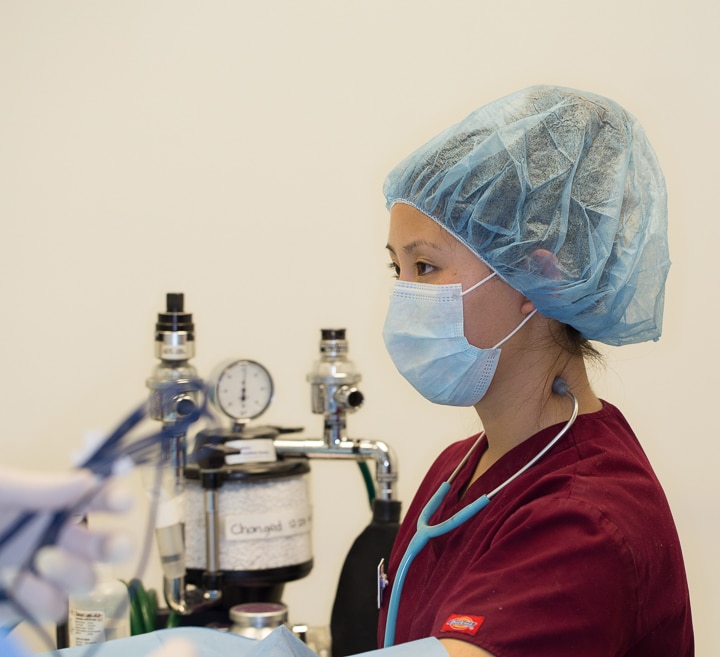
We use a special stethoscope (called an esophageal stethoscope) that is passed down the esophagus and can give us a clear sound of the heart
Surgery

Our patient is carefully clipped and scrubbed
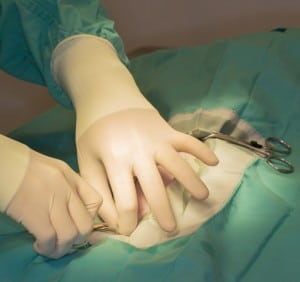
Our surgeon does the all important draping after the final cleanse of the abdomen

Under these drapes is a hot water blanket and also hot water bottles

When our surgeon is comfortable everything is in order he makes his skin incision

There is a special location on the abdominal muscles called the linea alba. You can see it as this white horizontal line between the muscles.
It is here that our surgeon cuts through the muscle and enters the abdominal cavity without cutting any abdominal muscles. This is a tendon that holds the abdominal muscles together, and is the area that has the best holding strength when we suture the area back together. If it did not have this strength, we would have an abdominal hernia.

The scissors is used to make the cut through the linea alba into the abdomen

The pancreas is rapidly isolated and a insulinoma nodule is searched for visually and by palpation. Do you see the small nodule on the pancreas?

The arrow will help you visualize the nodule

Many nodules are gently squeezed out

This is a typical insulinoma nodule after removal from the pancreas

This is the report we receive from our pathologist confirming the diagnosis

Sometimes these tumors need to be cut out. These are hemoclips, metal sutures that stop the bleeding of small vessels buried in the fat around the area.

On occasion we encounter a pancreas that has a large tumor

The arrow points to the lower left edge of the tumor
After removal of any pancreatic tumors we check the rest of the abdominal organs for any problems. Ferrets are prone to many problems, and if we are doing surgery for a specific problem like insulinoma, we make sure to check the other internal organs.

Our surgeon is carefully palpating the length of the intestines to feel for any abnormalities, especially foreign bodies and cancer.

The spleen is assessed next in this patient. Even though it is large, it is not necessarily diseased. That nodule at the end is not significant.

The liver is carefully assessed

This one is cystic
A very important organ to check is the adrenal gland since adrenal gland disease is common in ferrets.

This one is normal so it is difficult to visualize. It is the small pink circle of tissue that lies to the left of the dark brown kidney, which in this picture is surrounded by normal fat. Can you see it?

After surgery our little patient is kept cozy warm, watched carefully for hypothermia and hypoglycemia, and monitored closely for pain after it is given its pain injection.

This short video goes through the important points of surgery to remove nodules from the pancreas and also remove an adrenal tumor. Notice how we use the laser to make the initial incision.
Prognosis
Insulinoma’s are malignant tumors that will decrease a ferrets life span and compromise its quality of life. This is a serious disease that does not lend itself to a cure or long term control. Longevity after diagnosis varies from weeks to years, and depends on the duration of the problem prior to diagnosis. The sooner we make the diagnosis, the more that can be done to treat the problem and increase a ferret’s quality of life and lifespan.
FAQ’s
1) Is insulinoma in ferrets painful?
This is a cancer of an important internal organ, so at the least a ferret with this problem is uncomfortable all of the time, probably with painful bouts.
2) Can insulinoma in ferrets be cured?
Surgery can temporarily slow the disease down significantly, and medication can help keep it under control, but in most cases, even though your ferret can lead a good quality of life, the disease is not cured.
3) How can I prevent insulinoma in my ferret?
Keep your ferret active, do not over feed it, and monitor it carefully for any signs of this disease that you have learned about in this page.
Bring your ferret in for yearly exams when it is young, and as it ages bring it in twice per year for this exam and blood panel. Do not feed your ferret for 2-4 hours prior to this blood panel so that we can do a routine in house blood glucose check for early diagnosis.
Any time we make a diagnosis early in the course of a disease, and even if we cannot control the disease and only slow it down and manage, there is so much more we can do when we initiate treatment early.