

Long Beach Animal Hospital offers pot bellied pig spay services for pig owners in Southern CA
Introduction
Spaying a pig has similarities to spaying dogs and cats, but not a lot! It is an interesting surgery because of the unique anatomy of the pot bellied pig. They have miles of intestines and a uterus that’s very long because of the large number of piglets that are born at one time.
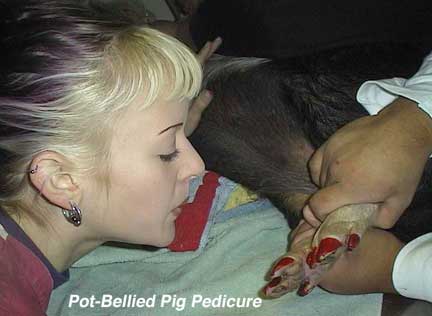
A spay is technically called an ovariohysterectomy (abbreviated as OVH). This is a removal of the two ovaries and the uterus. Make sure you go down to the end of this page where we added a pedicure to our spay!
On the day of surgery we need your pet in the hospital between 7:30 AM and 9 AM. Please take away all food and water when you go to bed the evening before surgery, and do not give your pig anything to eat or drink the morning of surgery. It will go home in the late afternoon the day of surgery. Please call our office at 4 PM for pickup time, you will be given post operative instructions then.
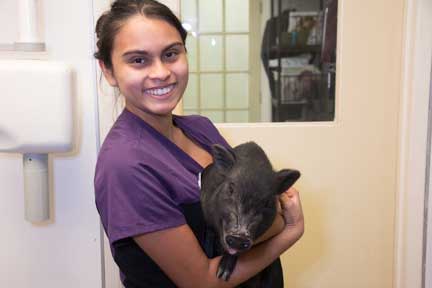
Our surgical patient today is a young female pot-bellied pig
Pre-Surgery Preparation
Pre-anesthetic preparation is important in every surgery we perform, no matter how routine. All of our neuters receive a pre-anesthetic test several days prior to surgery.

All of our surgery patients are given a thorough exam well before surgery

This is a normal pot bellied pig blood panel obtained prior to surgery
Anesthesia

Our anesthetic form keeps a record of everything we do

Our exam continues when our patient is brought into surgery
Pigs need to be monitored carefully for overheating (called malignant hyperthermia) during anesthesia, which is the opposite of most anesthetized animals. They produce more body heat relative to other animals because of their large muscle mass. Pigs do not sweat or pant, they need to be in contact with something cool to rid of excess body heat. Because of this we constantly monitor their temperature during and after the surgery.
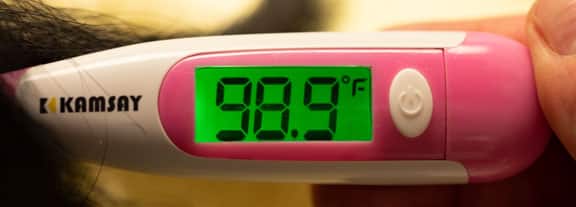
Because of this we monitor their body temperature closely. This is a normal temperature.

We keep a close tab on important physiologic parameters for all of our surgeries. Monitors like this give us an early warning of an impending problem.

We like to monitor the blood pressure and heart rate during surgery of our patients
We also like to keep track of the oxygen saturation with the pulse oximeter
Pigs

Even with all of this high tech equipment we like to be hands on when monitoring anesthesia
Surgical Preparation
This is a sterile abdominal surgery, and our surgeon starts the pre-surgical process by using special soap to clean his hands.
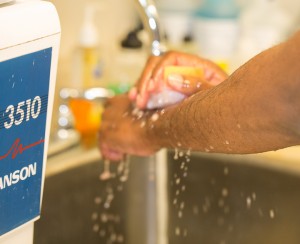
He washes his hands several times with the surgical soap and brush before putting on sterile gloves
While our patient is being anesthetized our surgeon is already in our surgical suite setting up instruments. Our surgeon is ready to start before our patient is at a proper plane of anesthesia. Once the anesthetist gives the green light the surgery starts immediately. We want our surgeon waiting for his patient, not the other way around. All of this is to minimize anesthetic time.

After scrubbing, gowning, and gloving, our surgeon opens up the surgical pack
He then confirms the instruments are sterile with a sterilometer. This is an indicator strip confirming the instruments have been sterilized properly
It takes a lot of clamps to spay a pig
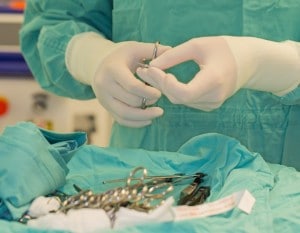
While our patient is being anesthetized our surgeon prepares the instruments
Our surgeon is ready to start before our patient is completely prepped. Once the anesthetist gives the green light the surgery starts immediately. We want our surgeon waiting for his patient, not the other way around. All of this is to minimize anesthetic time.
Anesthesia
Once our pig is anesthetized, prepared for surgery, and had its monitoring equipment hooked up and reading accurately, the surgery can begin.
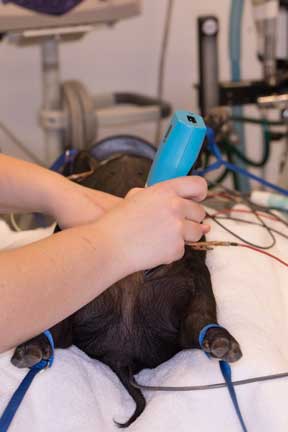
As soon as she is anesthetized and hooked up to her monitoring equipment her abdomen is shaved
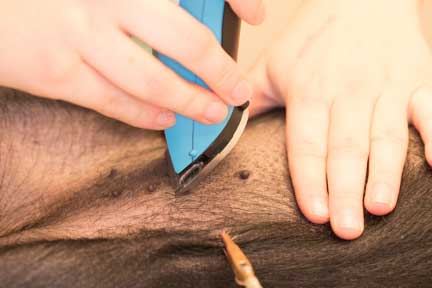
We are meticulous about this since we do not want an infection after surgery
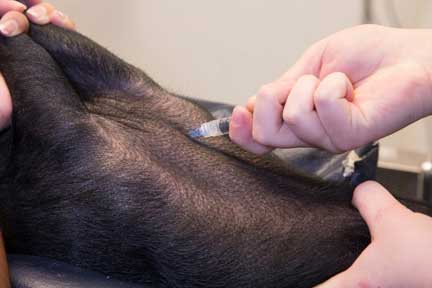
While she is anesthetized we give her a local anesthetic at the incision site so that she awakens pain free
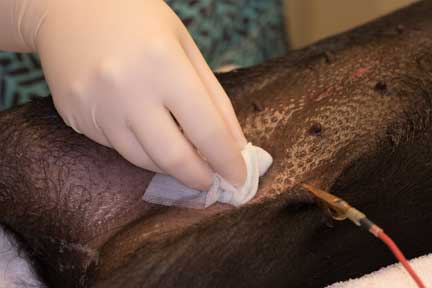
After clipping we scrub the skin many times with a special surgical soap. The organge cord is a lead for her monitoring equipment.
Surgery
Before we show the surgery photos let’s have some fun and show you a radiograph of a pig abdomen. This pot-bellied pig is lying on its right side, with the head to the left. It is a picture of the abdomen. Almost everything you see in this radiograph is the intestines. They have a very long intestinal tract, a fact that will become obvious when you see the surgery pictures.
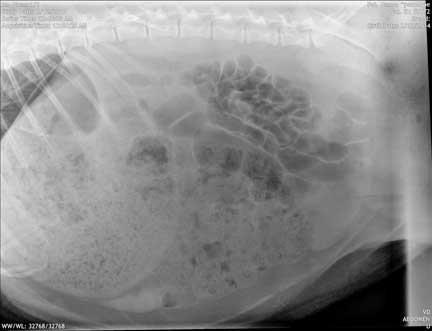
This is typical for a pot-bellied pig
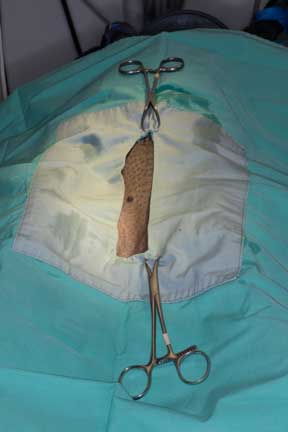
The first order of business by Dr. Ridgeway is draping the incision site with sterile surgical drapes
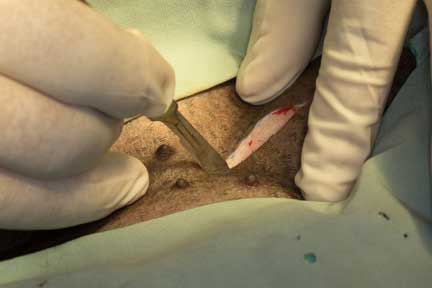
The initial incision is through the skin and into the subcutaneous (SQ) tissue that is covered in fat
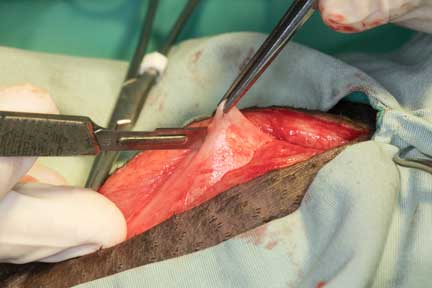
A scalpel blad is used to cut through the muscle layer under the SQ tissue
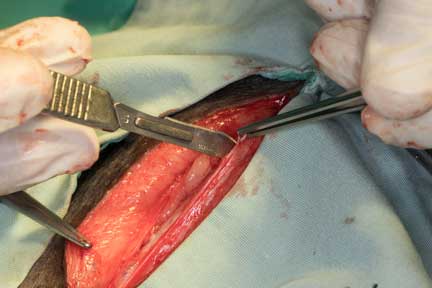
The scalpel cuts into a specific area of the muscle called the linea alba. This is a tendinous attachment between the muscles that is used to suture the muscles back at the end of the surgery.
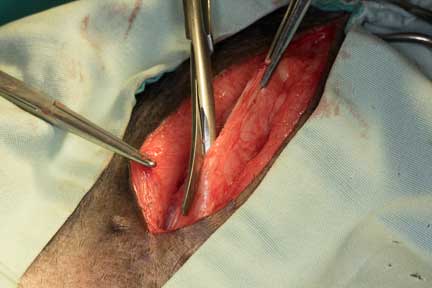
The incision is extended with a scissor
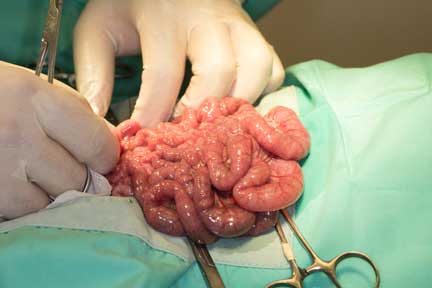
Once into the abdomen the large amount of intestines pop out through the incision. We were’t kidding when we said they had lots of intestines!
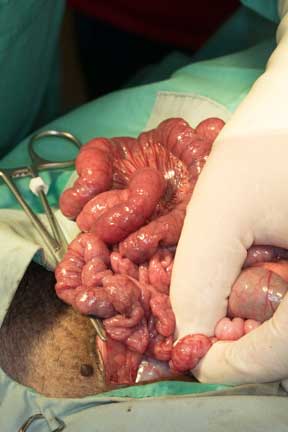
Somewhere in all of those intestines is the ovary, which our surgeon has identified
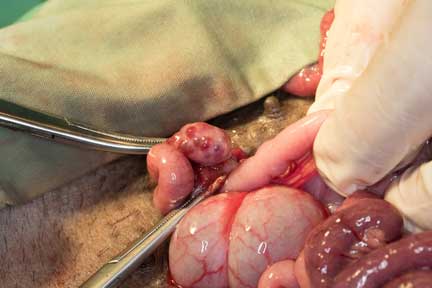
You can see the follicles on it as Dr. R clamps it for removal
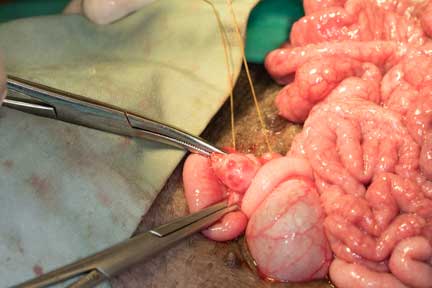
Special sutures are used to tie off the ovary before removal
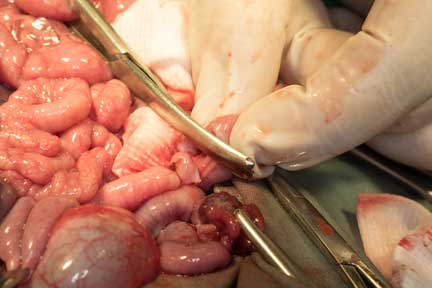
More than one suture is used, and once Dr. R feels that the sutures are secure, he cuts out the ovary. The same thing is done with the ovary on the other side.
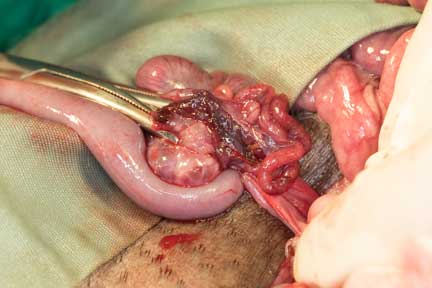
The body of the uterus is removed next. You can see it as that horizontal tube towards the left.
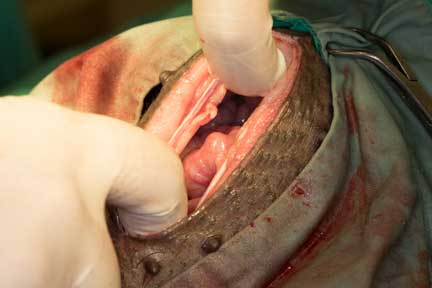
Checking to make sure all of the sutures are holding and there is no bleeding before suturing the muscles back together
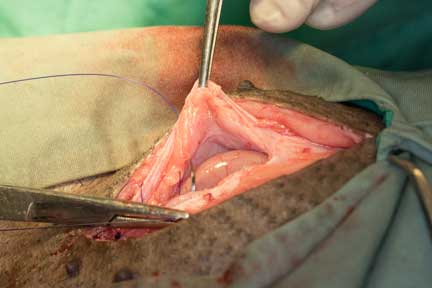
Suturing the linea alba, with a section of small intestine in the abdomen showing. Can you differentiate the linea alba from the SQ tissue that is apparent in this photo?
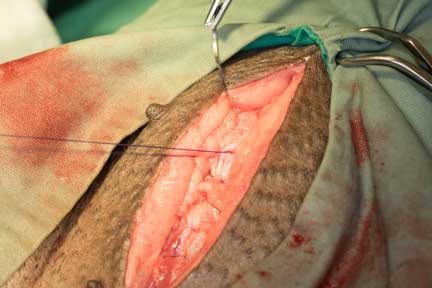
Almost through suturing the muscle layer (linea alba) back
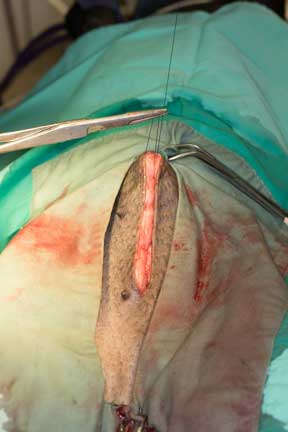
Linea alba sutured, putting the final suture in the SQ tissue. Note how the skin edges are coming closer together as the SQ tissue is sutured. This suture will dissolve on its own in several months.
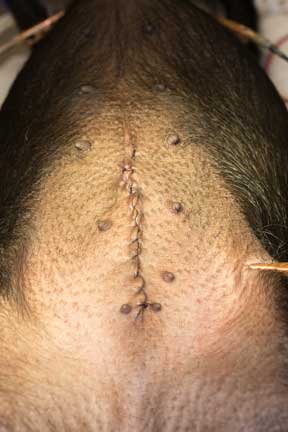
Our patient after the linea alba, SQ tissue, and skin have been sutured. We remove these sutures in 7-10 days.
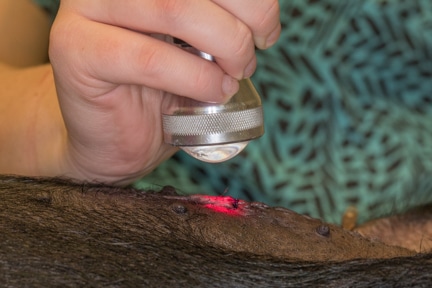
Cold Laser treatment at the incision before waking up from anesthesia. This aids in healing and helps decrease inflammation at the incision site.
Here it is in action
It is at this point that we will give a pain injection, which might make this pig groggy for the evening.
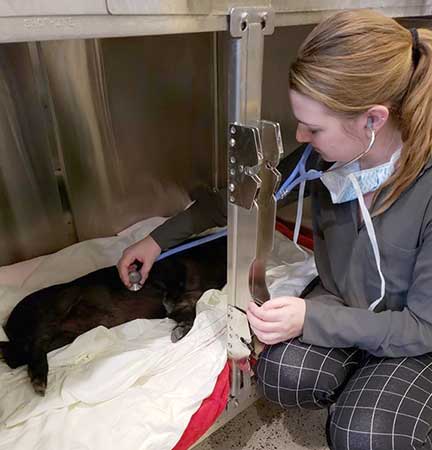
We keep a close eye on our patients as they are waking up from anesthesia
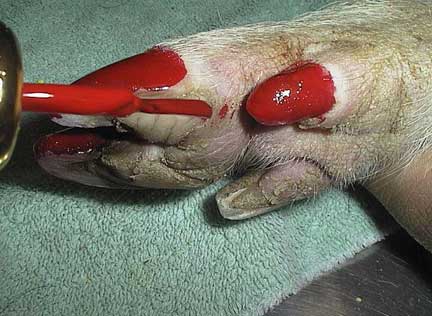
The owner of this pig requested a pedicure while under anesthesia. So, after we trimmed her nails we painted them with the polish the owner brought us.
Postoperative Care
Most pigs go home late in the afternoon on the day we perform the surgery. They might be groggy from the pain injection which is advantageous because they will remain calm and allow the healing process to start immediately. By the following morning the grogginess will have worn off.
When you first get home do not be in a big rush to feed. After 1 hour at home offer a small amount of food and water. If the appetite is good, offer more several hours later. Do not over do the feeding the first night because anesthesia can make them nauseous.
Keep contact with children and other pets to a minimum the first night, and restrict activity for several days to allow the incision to heal. Try not let your pig go outside until healing is complete.