

Introduction
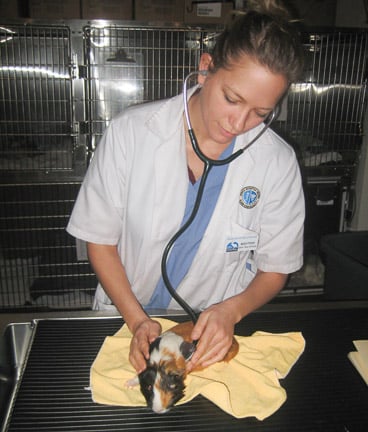
Guinea pigs are popular pets, and we see lots of them. In this picture we are teaching one of our veterinary student externs how to examine one.
Mange in Guinea Pigs is caused by a parasite that is similar to the scabies parasite in people (Using guinea pig mite treatment products can help eliminate infestations)
It is seen more often in households that have several pigs. This disease occurs in other animals also, including dogs and cats.
(Broad spectrum parasite control products for small pets can help prevent spread)
The might that causes this can cause enough pain as to disrupt your little guys behavior and appetite. In a severe a guinea pig can succumb to the problem.
If you have more than one guinea pig in your house, and one is ill with this problem, all of them need to be treated since some can be carriers without showing any symptoms. The might that causes this does not affect people.
Cause
Mange is caused by a microscopic parasitic mite named Trixacarus caviae that burrows into the skin and lays eggs. It is transmitted by direct contact, usually when a new pig that has the mite is introduced with pets already in your household. The mites that cause mange in guinea pigs does not affect humans.
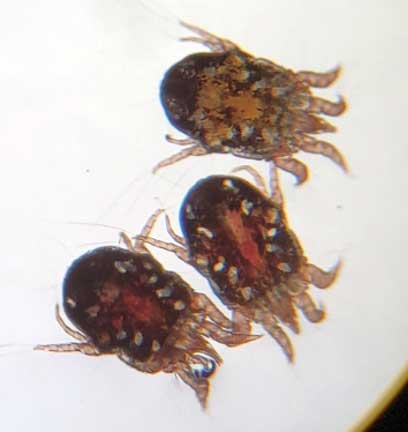
This is typical of what a mange mite looks like under the microscope
Symptoms
Most Guinea Pigs that have Mange are itching (pruritis)
(Anti-itch sprays for small pets can help relieve discomfort)
and have patches of hair loss. Some even lose weight and have unSome even lose weight and have unhealthy looking hair coats.healthy looking hair coats.
(Guinea pig nutritional supplements can help support recovery)

This one has the problem on his face
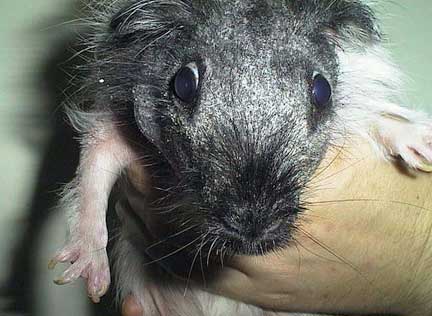
If you look closely even his legs are affected
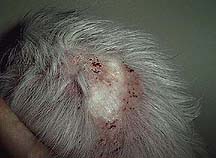
This pig has a patch of hair missing on his backside. He also has infected skin secondary to the scratching.
Diagnosis
Since the symptoms of allergic skin disease mimic those of other skin diseases, a thorough approach is needed to differentiate them. In every disease we encounter we follow the tenets of the “diagnostic process” to ensure that we make an accurate diagnosis, and that we do not overlook some of the diseases that are also encountered in conjunction with skin diseases. It is too easy to jump to the conclusion as to what is causing your pet’s pruritus.
The primary method of diagnosis is with a skin scraping.In this test we use a scalpel bland to gently scrape the skin where the mites might be burrowed. You might see some redness of the area after this. This is due to the fact that the mites burrow into the skin so we need to get deep enough to find them. The redness goes away soon after.
Since the mites sometimes burrow deep in to the skin, the skin scraping is not a perfect test and there can be false negatives because the mites are too deep to scrape.
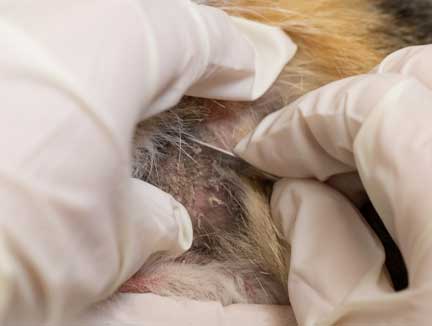
We tend to do the skin scraping where a patch of hair is missing
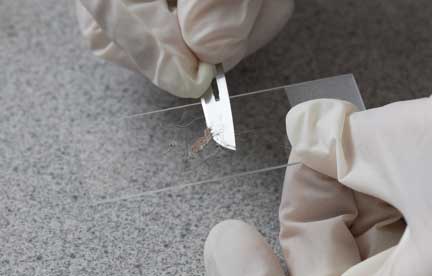
We put the scraped material on a microscope slide
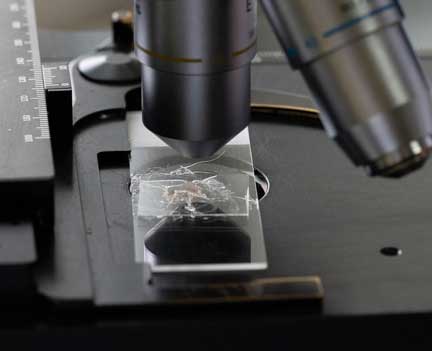
The scraped material is put under a high powered microscope under bright light.
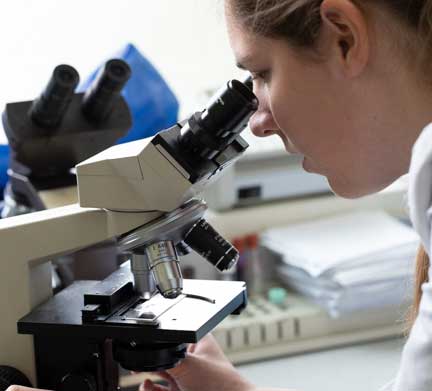
This is Allie, a veterinary student from Michigan State University learning how to use a microscope to look at a skin scraping. She is part of our student externship program where we train the students while they are still in veterinary school.
These students are required to post what they learned for the day on our Facebook page. It is called the Extern Daily Diary, and it goes back several decades.
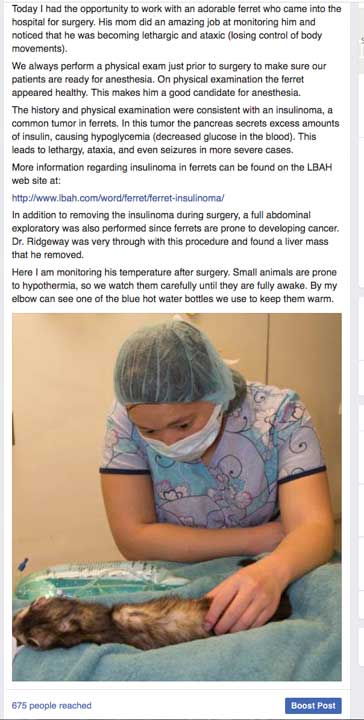
Here is the Daily Diary Facebook post of a student learning how to work with ferrets
Treatment
When a skin scraping is negative for mites, yet all indications are that mites are causing the itching and skin condition, we will treat anyway. Sometimes we also give antibiotics if the skin is so infected it has a problem called pyoderma.
The usual treatment for Mange is a drug called Ivermectin. Usually 2-3 injections are given between 1-2 weeks apart. The drug can also be used topically in some cases.
A topical called Revolution Selamectin), used every 2-4 weeks, is a convenient way to treat this.
Most Guinea pigs respond well to treatment, and it is usually curative.