

Introduction
This cute little guinea pig had a problem with his eye. There was a congenital problem with the hair above the eye. It was overgrown and irritating the cornea, so we decided to remover it surgically.

The extra lash is easily seen on this magnified view
The cornea is the outer clear part of the eye. This extra hair can cause severe problems to the cornea if the problem goes on long enough. There will be a corneal ulcer, which is painful. A painful eye will be further traumatized by an animal, adding substantially to the problem.
As time goes on the cornea can become thickened and vision loss will occur. In severe cases the cornea can be perforated from this ulcer and the eye will need to be removed.

The green on this inflamed cornea is fluorscein stain. This is a special stain that shows if an ulcer is present, and how severe it is.

This cornea is scarred and the eyeball is severely inflamed. This eye needs to be removed due to pain and loss of vision.
Due to all these possible complications it is imperative that we take care of the problem as soon as it is diagnosed. Any time your pet is squinting, has eye discharge or an inflamed eye, or is rubbing its face, it needs be examine by one of our doctors immediately due to the importance and sensitive nature of the eye.
Pre-Surgery Preparation
Physical Exam

All of our surgical patients are given a thorough exam the day of surgery. This is one of our student externs learning how to examine a guinea pig. They post their daily experience on our Facebook page called “Extern Daily Diary”.
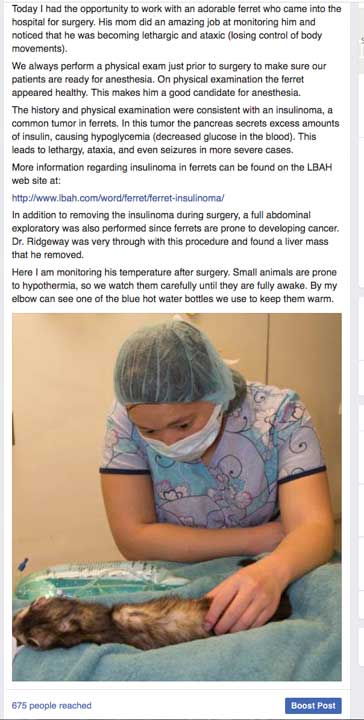
Here is an example of one students diary with a ferret
Blood Panel
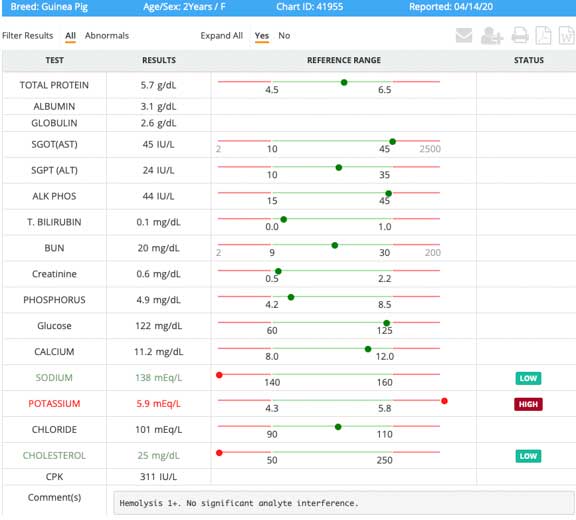
A normal Guinea Pig blood panel
Radiology (X-Ray)
We might even take a pre-surgical radiograph to make sure we do not miss something on the inside. Small critters and the more exotic critters are masters at hiding illness, and there can be a problem brewing on the inside that the owner does not notice or is not apparent on a physical exam.
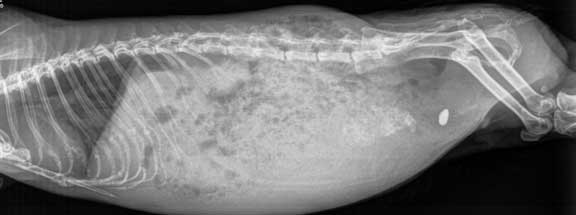
This is what happened in this case. Do you see the small white bladder stone on the right side of this radiograph? If you want to learn more about bladder stones in guinea pigs, and see how we surgical remove them, click here.
Anesthesia
Many of our patients are tiny, and we need to pay particular attention to anesthesia. When everything is to our satisfaction we will administer a sedative. This will calm our patient down and make the administration of the actual anesthetic, along with post operative recovery, much smoother. Once a pet is anesthetized, prepared for surgery, and had its monitoring equipment hooked up and reading accurately, the surgery can begin.
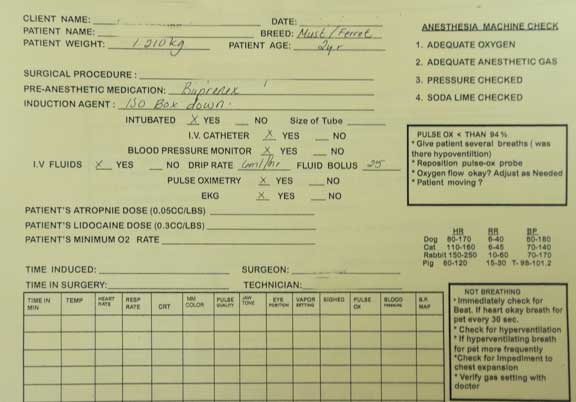
We use a detailed anesthetic form for every surgery
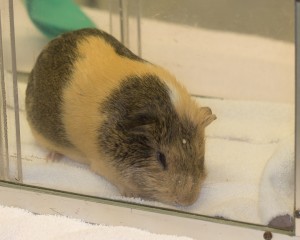
We start our guinea pig anesthesia in a special small aquarium with 100% oxygen
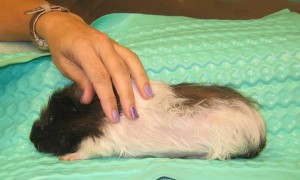
Small animals can lose body temperature easily while under anesthesia, and can become hypothermic. We keep them on a warm water blanket and monitor their temperature during the surgery to prevent this.
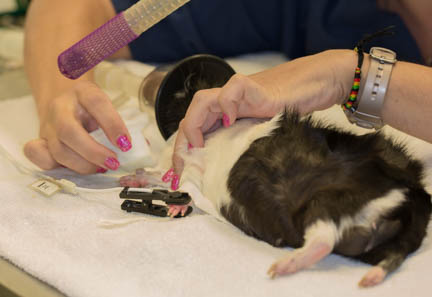
All of our Guinea Pigs are connected to instruments that closely monitor important physiological parameters. This one is being connected to a Pulse Oximeter to keep close tabs on oxygen levels and heart rate
This video show how we use it. The number on the left is the oxygen saturation level, the number on the right is the heart rate

We also connect all of our surgical patients to an EKG (electrocardiogram) that is monitored by or Surgical Vet anesthetic monitor.

The SurgiVet Monitor keeps close track of many important parameters
Here it is in action on a different patient

We also carefully monitor the blood pressure. These are normal numbers for a guinea pig under anesthesia. Note how fast the heart is beating (212 times per minute) in a small animal as compared to a person
We also carefully monitor oxygen saturation on our surgical patient with a special and small pulse oximeter
We don’t rely only on hi tech anesthetic equipment, and are hands on at all times in monitoring our patients.

Our anesthetist nurse is monitoring our patient under the surgical drape. She is checking the color of the mucous membranes, along with the heart rate and respiratory rate
Surgeon Preparation
This is a sterile abdominal surgery, and our surgeon starts the pre-surgical process by using special soap to clean his hands.
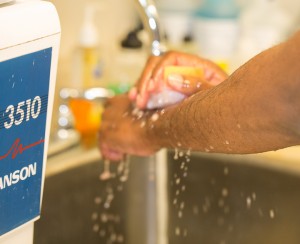
He washes his hands several times with the surgical soap and brush before putting on sterile gloves
While our patient is being anesthetized our surgeon is already in our surgical suite setting up instruments. Our surgeon is ready to start before our patient is at a proper plane of anesthesia. Once the anesthetist gives the green light the surgery starts immediately. We want our surgeon waiting for his patient, not the other way around. All of this is to minimize anesthetic time.

While our patient is being prepped for surgery our surgeon is getting the sterile instruments ready.
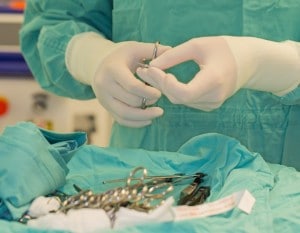
While our patient is being anesthetized our surgeon is already in our surgical suite setting up instruments.

Our surgeon is ready to start before our patient is completely prepped. Once the anesthetist gives the green light the surgery starts immediately. We want our surgeon waiting for his patient, not the other way around. All of this is to minimize anesthetic time.
Surgical Procedure
Now that our surgeon is ready, and our patient is safely under the proper plane of anesthesia, we can begin the surgery
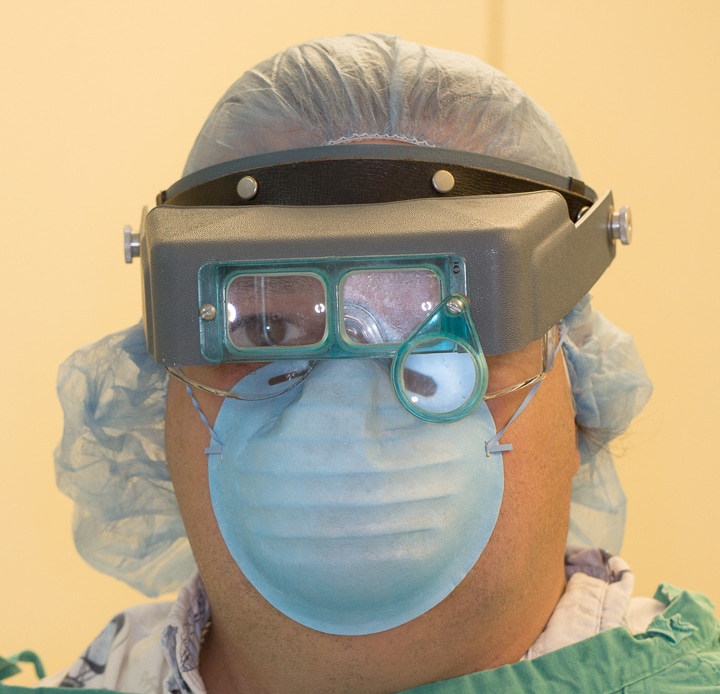
This is meticulous surgery so Dr. Ridgeway needs magnification (he looks like an alien creature)!

Here he is gently pulling up the inside of the upper eyelid to get an idea of how the lash is attached. He will now remove it with our surgical laser.
We use the laser for many reasons. It gently removes the hair, and it does this without any bleeding or inflammation. This is important in this very sensitive area. In the years before we had the laser we used a small scalpel blade. Even though it was a small blade it still caused bleeding and inflammation post operatively.
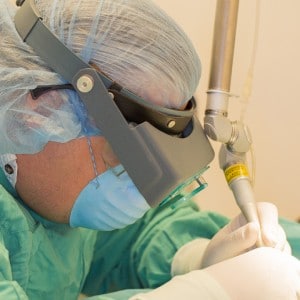
The laser in action
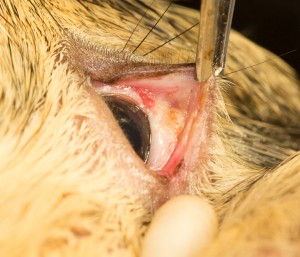
No more hair, and more importantly to our surgeon, no bleeding or swelling
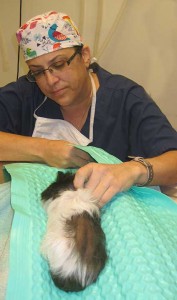
Lisa keeps a close tab postoperatively to make sure our small patients wake up without any problems
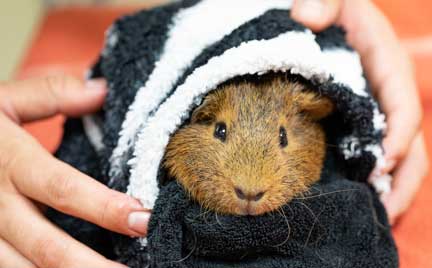
If they seem cold after surgery we wrap them in a special guinea pig warmer we have
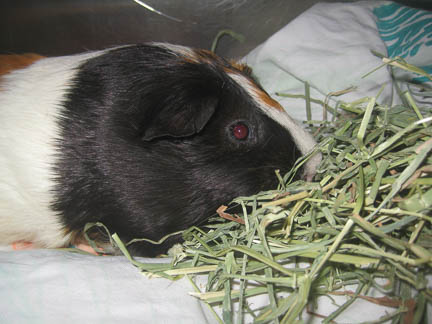
This is how we like to see our Guinea Pigs right after surgery!