

Introduction
Nutritional Secondary HyperParathyroidism (NSHP), which is one of the Metabolic Bone Diseases (MBD), occurs in many reptiles that are non-carnivorous. This page talks about Chameleon Bone Disease, although it is most common in the green Iguana. We have a detailed page on this disease in iguanas.
What is Chameleon Bone Disease?
In this disease the body is absorbing excess amounts of calcium from the bones in order to maintain a proper blood calcium level. This proper calcium level is vital to most of the metabolic processes that occur, so the body takes from the bones and gives to the bloodstream. The bones then become weaker.
Causes and Risk Factors
A diet that does not have the proper calcium to phosphorous ratio (too little calcium and too much phosphorus) is a big cause for the problem.
(Reptile calcium supplements can help maintain proper bone health)
A lack of vitamin D prevents the body absorbing whatever calcium is in the food. Add a lack of sunshine to produce vitamin D to the fact that too many chameleons are kept in an environment with too low of temperature and humidity, and the problem appears.
(Reptile temperature and humidity controllers can help maintain ideal conditions)
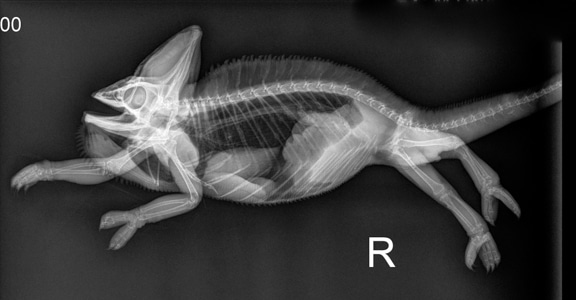
This is what the bones should look like in a normal and healthy chameleon
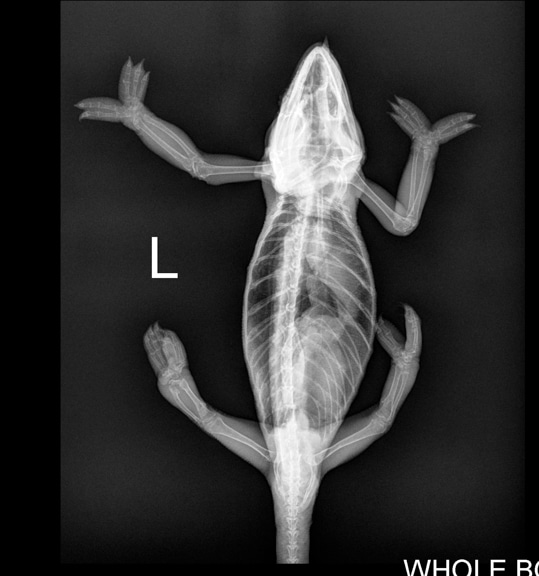
Same healthy chameleon in a different view. Use these two radiographs as a basis for comparison when we show you one with NSHP.
There are differences in why chameleons get this problem as opposed to NSHP in the green iguana, but the main problem of inadequate husbandry stays consistent. You should visit our Iguana page on MBD for much more information regarding cause and treatment of this terrible disease.
Uniqueness of Chameleons
Veiled chameleons are highly susceptible to stress, and usually do not do well in captivity. Therefore it is important to pay as much attention to proper husbandry as possible. Veiled chameleons do not drink from a water bowl, and need to be misted.
(Automatic reptile misting systems can help maintain hydration)
They need a basking spot with a heat bulb that gives them a heat range of 72-80 degrees F.
They should have exposure to direct sunlight, or else a full spectrum UVB (ultraviolet B) light. Adult chameleons should be fed gut-loaded crickets (feeding the crickets collard greens, mustard greens, and squash), dusted with calcium and vitamin powder.
(UVB lighting for reptiles can support vitamin D synthesis)

This is what we prefer to see, a normal veiled chameleon with an attitude!
Symptoms
Poor appetite, lethargy, inability of a female to lay eggs, lameness, and spinal curvature problems are typical.
This female veiled chameleon came to us with a problem. She was unable to eat or walk well. Any time we have an ill chameleon we handle them gently because they are fragile.

Notice anything wrong?

Maybe this picture will help in your diagnosis

Her NSHP problem is so severe that her tongue just hangs out

She was dehydrated, so we rehydrated her medically with fluid injections We were worried her tongue would dry out, so we dripped water on her on tongue.

We kept her surrounded by warm blankets and soaked paper towels
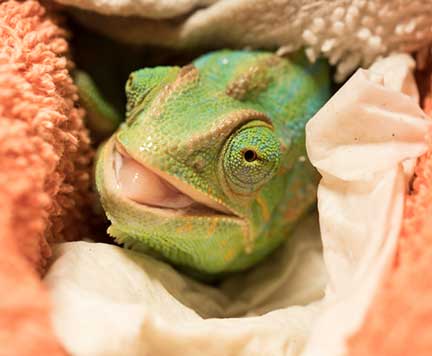
She was able to pull her tongue into her mouth once she was better after our rehydration and medical treatment

We applied a temporary porous tape bandage to keep the tongue inside when we were not feeding her
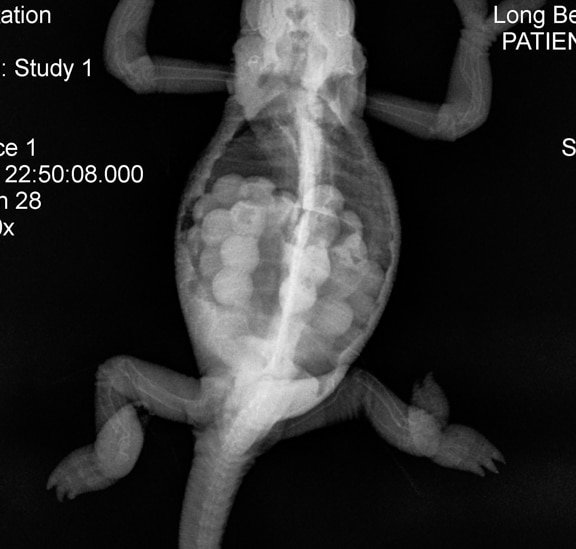
In addition to the tongue problem, she is filled with eggs and has fractures of her bones. She cannot lay these eggs because they do not have adequate calcium in their shells and also she is too weak since calcium is needed for muscle contraction. This chameleon is seriously ill, and if we can get the bone problem solved we would think about spaying it to remove the eggs.

The splint we put on her fractured leg
Their eyes are amazing!
This is another chameleon with MBD, although the tongue is not affected on this one

This chameleon is weak and cannot walk

It has a spine curvature, along with fractures in all four legs.

This is the radiograph of this chameleon, see if you can see the fractures on all 4 legs. The bones lack density, and do not show up well on this radiograph, further evidence of the severity of this chameleon’s MBD. Compare it to the normal uromastyx below.
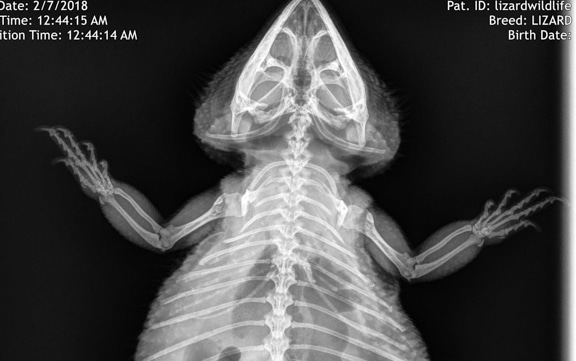
The increased bone density of the front legs is apparent
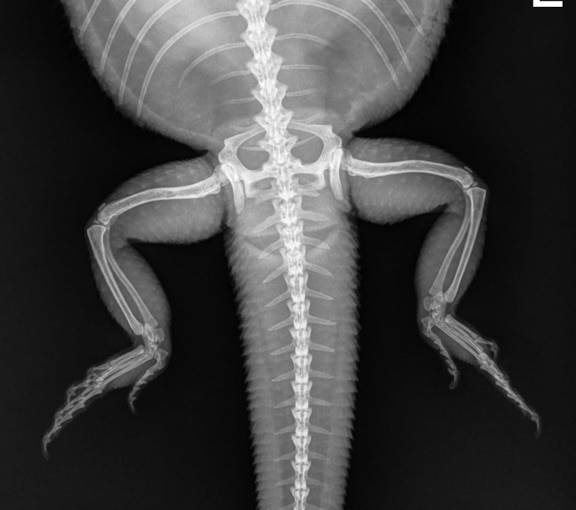
The rear legs, pelvis, and tail show strong healthy bones
Treatment
Before we can correct the husbandry and nutritional problems that caused this, we need to stabilize these fractures. It will be done with custom splints that will stay on at least one month.

Talia, our ace RVT (Registered Veterinary Technician) went to work, and made custom splints

It is important to put lots of padding under the splints

The left front leg is getting its first layer of gauze wrap

Half way there, both front legs are done
 Our finished product, a four banger splint
Once the factories are addressed then we address the husbandry problems by doing the following:
- Assist feeding
- Fluid therapy
- Warmth
- Calcium supplements
- Vitamin D injections
- Proper Humidity
- Exposure to direct sunshine or a UV lamp
These treatments are performed in our hospital by our nurses. Once your chameleon is stable and improving we will show you how to do this treatment as needed on a long term basis at home. We will recheck you pet as healing progresses, especially if it has fractures.
Prognosis
The prognosis is very guarded due to the fact true chameleons do not do well in captivity in the long run, and the fact that by the time an owner notices their chameleon is very ill the disease is well entrenched and hard to correct.
Prevention
Think seriously about owning one of them before you are enamored with their uniqueness. Make sure they have the proper husbandry of food and environment as described in this page.
Return to Reptile Diseases Section