

Introduction
The Bulldog is a wonderful pet that is full of personality. Bulldogs are predisposed to certain diseases, so careful observation of your pets daily routine is important. Any significant change in this routine is cause for an examination.
The selective inbreeding that has give the bulldog its distinct look has come at a big price in regards to diseases they commonly get, especially respiratory disease. These diseases are chronic in nature, and usually can only be controlled or minimized with medication or surgery. Rarely are they cured, so you will be dealing with them for the duration of its life.
Because of this strong predisposition to getting a wide variety of diseases, a bulldog should be brought to us years for a Wellness Exam. During a Wellness Exam we will look for problems that commonly occur so we can treat early if possible.
During this exam we will also teach you how to do an In-Home-Exam to help you help us catch these problems. You are part of our health care time and we want you to be informed as much as possible.
Our web site in the Diseases Section has detailed information on many of the diseases we see in Bulldogs. This page will go over some of the most important ones. Please read this page carefully and click on the links that have more information for the sake of your pet.
Chondrodystrophy
The bulldog’s unusual appearance arises from a condition known as chondrodystrophy, a form of dwarfism, where cartilage and connective tissue develop abnormally. This leads to increased incidence of decreased growth, twisted bones, and spinal disc calcification.The spinal or intervertebral discs may be more easily injured in these dogs, leading to chronic pain and sometimes loss of function of the legs.
The ligaments in chondrodystrophic dogs tend to be weaker than in normal dogs, leading to joint laxity (the joints are less tight and functional, leading to injury, arthritis and pain). Ligaments are supposed to keep the joints together when weight is placed on the legs, but loose ligaments allow too much instability, and this then leads to growth problems, pain and stiffness, even in young dogs.
Arthritis
Due to spinal cord and bone malformation the bulldog is prone to arthritis. This is a severe and painful problem, and needs to be diagnosed and addressed early.

The arrow points to the arthritis in the knee (stifle) joint
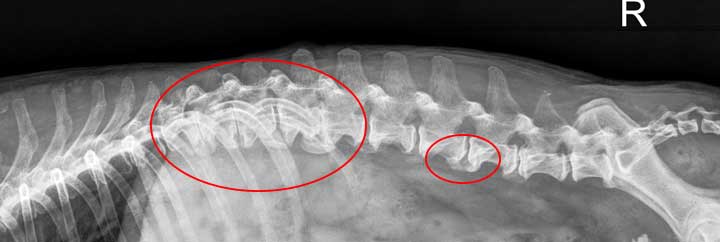
The badly arthritic spine is circled
Respiratory Conditions
Breathing Conditions (brachycephalic syndrome)
The shape of their face (flat)and breathing passages predisposes them to breathing conditions. This is called the brachycephalic airway syndrome. This makes them noisy breathers that snore quite a bit. If they are overweight these problems are exacerbated.
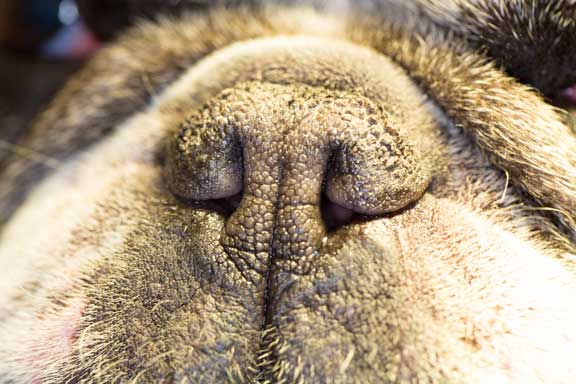
Their nostrils are occluded (called stenotic nares) in the brachycephalic syndrome
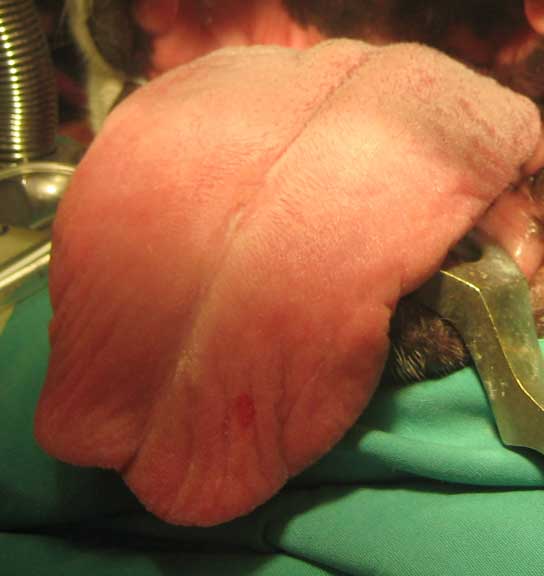
They also have a thickened and very long tongue further making it difficult for air to get into the lungs.
In addition to these problems they have a small oropharynx and a small windpipe (trachea).
Symptoms of coughing, wheezing, or difficult breathing warrant an exam due to these breathing problems.
All Bulldogs are noisy breathers. In spite of this fact, any sign of respiratory disease warrants immediate attention. All exercise should be in moderation and during the cool time of the day (very early and late in the summertime), and provide a cool environment when not exercising.
A bulldog can easily overheat even when it is not excessively hot. Once they start panting excessively they sometimes cannot get back to normal breathing, and they can die once they get in this vicious cycle they cannot get out of. Prevention is everything.
Skin Infections
The large amount of loose facial skin can cause a skin infection. Symptoms include an odor coming from the haircoat or moist or inflamed skin. They also get skin allergies and mange, as evidenced by excessive scratching or licking, and hair loss.
Since all these different skin conditions have similar symptoms, an accurate diagnosis is needed for proper treatment. At the minimum, all your pet’s skin folds should be cleaned, dried, and have an antibiotic powder applied daily.
Eye Diseases
A number of eye diseases are common:
- Cherry Eye- protruding gland of the third eyelid, looking something like a round pink cherry in the corner of the eye
- Entropion- the eyelids roll inwards, causing the eyelashes to scrape the cornea
- Distichiasis- an eyelash protrudes abnormally and irritates the cornea
- Glaucoma, cataracts, and ulcers of the eye are not unusual
Symptoms of eye disease include redness, discharge, squinting, or pawing at the eye.
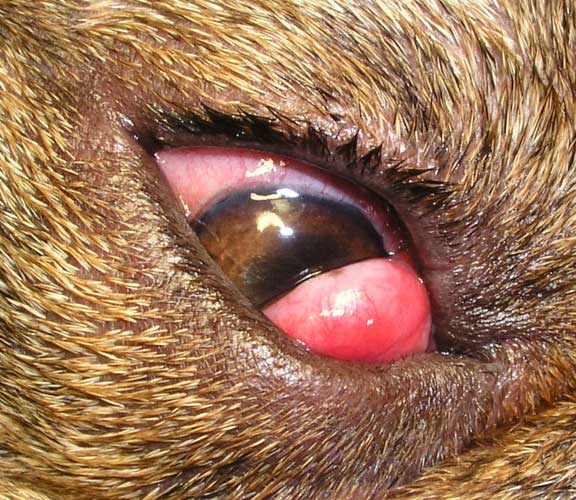
Cherry eye (prolapse of the gland of the nictitating membrane)

Cataract with an eyelid tumor (meibomian gland)

This eye is inflamed with a cloudy cornea is caused by glaucoma
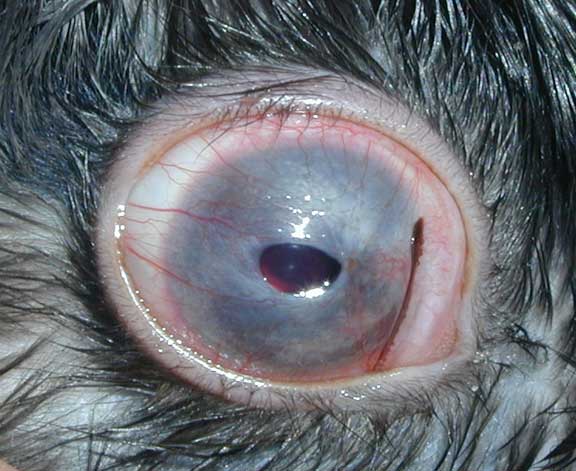
This is a severe (and painful) canine corneal ulcer
Hormone Diseases
A hormone disease called hypothyroidism can occur. If your pet seems lethargic or is putting on weight, even though you do not seem to be overfeeding, this should be checked with a blood sample. The first test we do is called a Total T4.
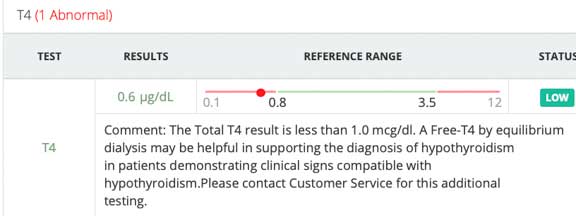
At 0.6 this dog is below the minimum amount of thyroid level in the bloodstream. It should be at least 0.8 at the low end, and no higher than 3.5 at the high end. If it is more than 3.5 then the opposite problem, called hyperthyroidism is suspected, although this routinely found only in the cat.
Tumors (cancer)
Bulldogs are prone to two tumors. One is a skin tumor called a mast cell tumor, the other is a lymph node tumor. Our staff can teach you how to check the skin coat and lymph nodes for indications of these problems.
Dental Disease
Bulldogs are particularly prone to dental disease. Their malformed oral cavity adds to the problem. It is important to learn how to brush your pet’s teeth while it is a pup so that you are successful at it when the problem starts to arise later. We have a special kit for this purpose, please have one of our nurses show you the proper technique.

If you start early in life it becomes a fun game to play
We also have a food called t/d (it stands for tartar diet) that is a big help if you cannot brush its teeth. Our Nutrition Page has more information.
Wellness Exams
As your bulldog gets older yearly exams are needed to identify the accumulation of tartar and treat it before it progresses to more serious complications and we have to remove rotten teeth under anesthesia. As tartar accumulates on the teeth we will perform non-anesthetic dentals (this is not a replacement for brushing) every 6 months and hopefully never have to remove rotten teeth under anesthesia.
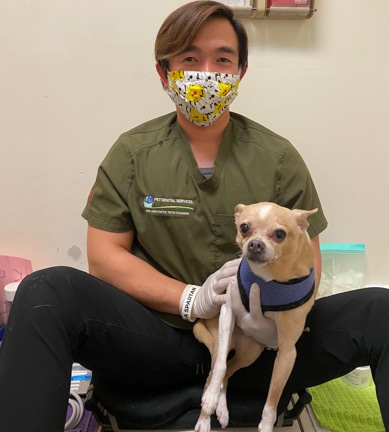
This dog just had its teeth cleaned with Non Anesthetic Dental
Heart Disease
Heart disease can also occur as your Bulldog ages. We will check for heart murmurs with our stethoscope during your yearly examine to diagnose this problem and treat it before the onset of congestive heart failure.
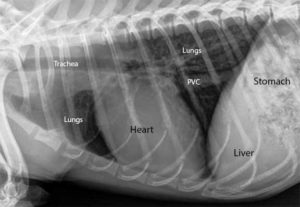
This radiograph gives you a feel of the anatomy of the chest where the heart resides