

Introduction
Dachshunds are full of personality. They are predisposed to certain diseases though, so careful observation of your pets daily routine is important. Any significant change in this routine is cause for an examination.
Our web site in the Diseases Section has detailed information on many of the diseases they are prone to.
Common Dachshund Health Problems
Intervertebral Disk Disease
They are susceptible to a problem with their spinal cords called Intervetebral Disk disease (IVD). This is a serious problem that can lead to paralysis. Symptoms can include lethargy, lack of appetite, crying or whining, reluctance to move or jump, or even anxiety, is cause for immediate examination. Since this is a prevalent problem in Doxie’s please use our web site to learn much more about IVD.

Compare the disk outline in red to the others to see a dog with a problem
Heart Disease
Several different types of heart problems can affect them. The most common is one called a Patent Ductus Arteriosis (PDA). Look for symptoms of lethargy, exercise intolerance, coughing, and poor appetite as a clue.
We will check for heart murmurs with our stethoscope during your yearly examine to diagnose this problem and treat it before the onset of congestive heart failure.
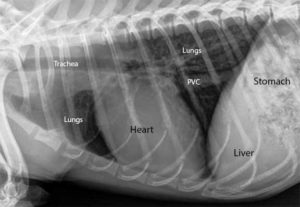
This radiograph gives you a feel of the anatomy of the chest where the heart resides
Skin Problems
Doxie’s are prone to skin conditions, particularly mange and allergies. These diseases manifest themselves as hair loss or excessive licking or scratching. In addition to mange and allergies, they also get a skin tumor called a mast cell tumor. All skin lumps that persist should be checked to determine if this condition exists.

This is what a mast cell tumor of the skin looks like
Run your hands over its haircoat daily because they can even get a malignant skin cancer called a mast cell tumor. These can appear as minor bumps or areas of inflammation, yet they can be highly malignant.
Hypothyroidism
Hypothyroidism, a metabolic disease characterized by inadequate thyroid hormone circulating in the bloodstream, is common in the breed. Symptoms include obesity, lethargy, and/or coat problems. Affected animals may also have various reproductive problems, including irregular or absent estrus (heat cycle), and lack of fertility.
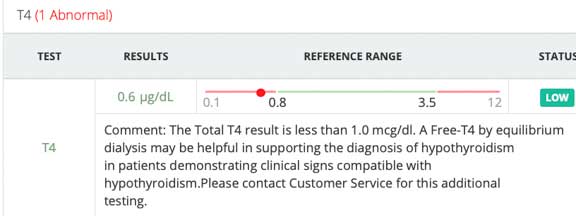
This result at 0.6 is low. The normal range is 0.8 to 3.5
Cushing’s Disease
Two other hormone disease that can occur include Cushing’s disease and Diabetes Mellitus (sugar diabetes). Symptoms here vary, but commonly represent as excessive thirst and urination.
In Cushing’s Disease the adrenal glands produce an excess of cortisone (cortisol). This causes a vast array of problems that you can learn about on our Cushing’s (Hyperadrenocorticism) Page.
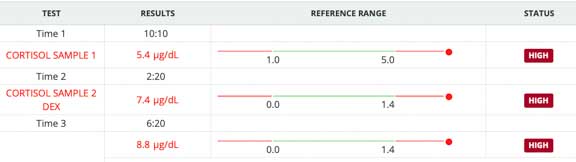
One of the tests to confirm Cushing’s is called the LDDS (Low Dose Dexamethasone Suppression Test)
Diabetes Mellitus (Sugar Diabetes)
Even though this disease is more prevalent in cats, Doxie’s can acquire this problem. It is so important and complicated that we have a page dedicated to Diabetes Mellitus.
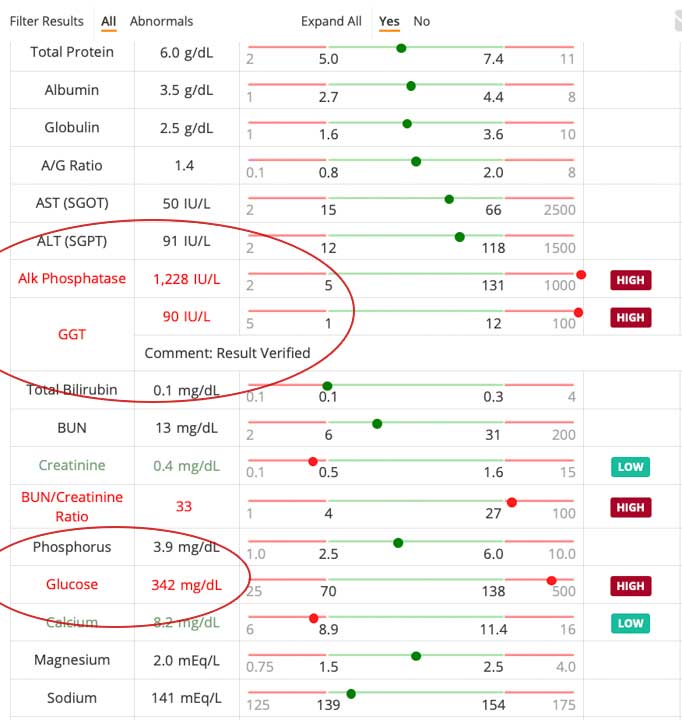
The elevated blood glucose is circled in red towards the bottom. The other two red circles show how the diabetes mellitus is affecting the liver.
Cancer
Many cancers can occur and affect a wide variety of organs. Look for lumps or bumps on the skin, mouth and anus. Also check the feet for swelling of the toes or lameness because they can get a cancer called Squamous Cell Carcinoma.

The large red circle is over the whitish and circular areas. These are the sub lumbar lymph nodes on a dog with malignant cancer of its large intestine.
Eye Problems
They are particularly prone to eye problems due to their inquisitive nature. This makes them susceptible to eye trauma, especially corneal ulcers.
Any sign of squinting, redness to the eye, ocular discharge, or cloudiness, warrants an exam.
Glaucoma, cataracts, and ulcers of the eye are not unusual.

This eye is inflamed with a cloudy cornea is caused by glaucoma
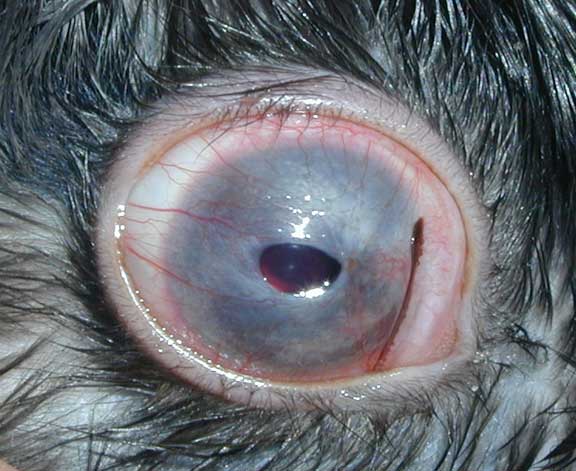
This is a severe (and painful) canine corneal ulcer
Bladder Stones (Urolithiasis)
Doxies can also get a bladder stone (called urolithiasis). Look for symptoms of straining to urinate, blood in urine, licking, or urinating small amounts frequently.
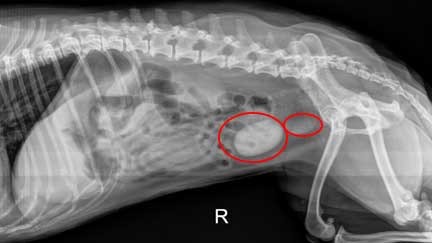
The large bladders stone is circled in red
Seizures (Epilepsy)
A type of seizure called idiopathic epilepsy can occur in this breed. Our Seizures Page has all the details.
Dental Disease
Dachshunds are particularly prone to dental disease. It is important to learn how to brush your pet’s teeth while it is a pup so that you are successful at it when the problem starts to arise later. We have a special kit for this purpose, please have one of our nurses show you the proper technique.

If you start early in life it becomes a fun game to play
We also have a food called t/d (it stands for tartar diet) that is a big help if you cannot brush its teeth. Our Nutrition Page has more information.
Wellness Exams
As your pet gets older yearly exams are needed to identify the accumulation of tartar and treat it before it progresses to more serious complications and we have to remove rotten teeth under anesthesia. As tartar accumulates on the teeth we will perform non-anesthetic dentals (this is not a replacement for brushing) every 6 months and hopefully never have to remove rotten teeth under anesthesia.
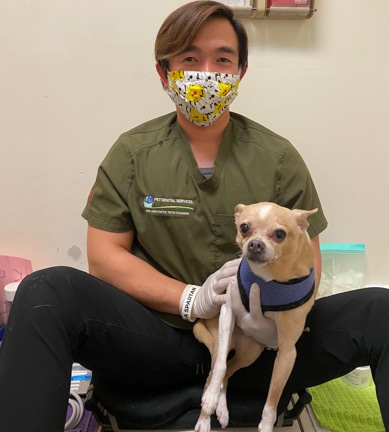
This dog just had its teeth cleaned with Non Anesthetic Dental
Patellar luxation
Doxie’s are prone to an orthopedic problem where the knee cap is loose and does not guide in the patellar groove properly. The symptoms of this are occasional lameness where you dog kicks its leg out on occasion. It is cured surgically.
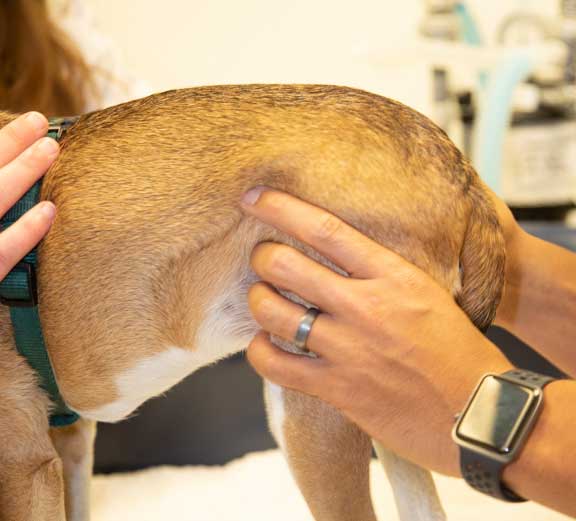
A knee exam confirms the diagnosis, and lets us know if the patellar laxation is medial or lateral

Those two white and round structures at the bottom of this radiograph are in the normal position
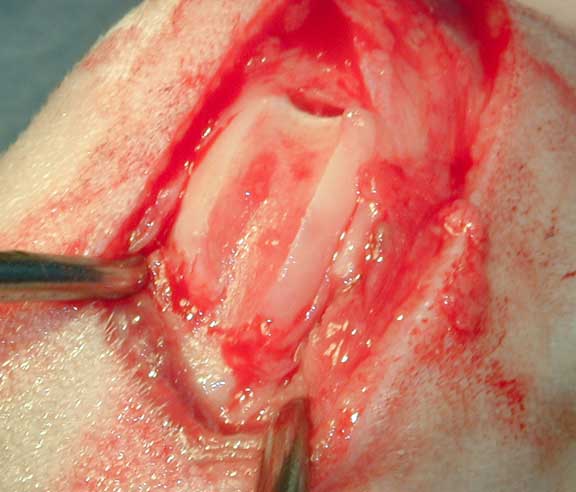
Surgery consists of deepening the patellar groove to correct the problem

If not corrected this can lead to painful arthritis