

Introduction
One of the most insidious diseases we encounter in felines is arthritis. We even see it in birds, dogs, reptiles, and pocket pets like rabbits and guinea pigs.
It was not long ago that pets were euthanized because they seemed “old” based on their symptoms of poor appetite, decreased activity, and lethargy. In reality they were not “old”, they had arthritis, and acted like they were old because they were painful.
Today we can treat their arthritis and give them a new lease on life and lead a great quality of life for many more years. All animals get arthritis, we most commonly see it in dogs and cats.
(Use joint supplements for cats to improve mobility)
Many of our pets are stoic, and can have a disease process brewing on the inside yet show no external symptoms. As the disease progresses eventually the symptoms appear, and we are presented with a very ill pet that seemingly became sick overnight. The reality is that the problem was present for a long period of time.
It went unnoticed until your pet went rapidly downhill, when the bodies mechanisms for compensating and coping with the disease have become overwhelmed, and your pet is in a debilitating condition. At this point the disease process is so well entrenched that the prognosis for recovery is poor.
The American Veterinary Medical Association (AVMA) recognizes the importance of early diagnosis and treatment of arthritis..
This concept applies to arthritis in cats.With our new digital radiography that gives us much more detail, we are diagnosing it earlier. Coupled with substantially improved treatments, we can successfully treat these arthritic and painful animals, and give them a vastly improved quality of life for many more years.
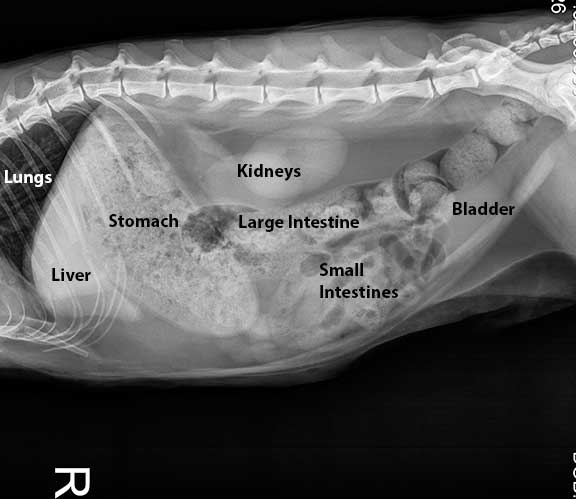
This digital radiograph of the abdomen of a cat shows the tremendous detail we get with digital, and how we can see the internal organs in the abdomen. Click on the photo above if you would like to learn how to read a radiograph (you do know the 5 radiographic densities don’t you?).
What’s even better is the fact that some of these new treatments do not involve the use of drugs. We have a multi-system approach to arthritis due to its chronic and debilitating nature, and the fact we strive for treatment modalities that involve minimal use of long term drugs.
Here is a summary of how we approach this important problem. We will talk about these treatments in more detail later in this page:
If your pet is overweight, a common problem in arthritic animals, modifying diet and feeding habits to bring it back to its fighting weight can minimize the symptoms of arthritis. This common sense, inexpensive, and drug free option, seems to escape many people.
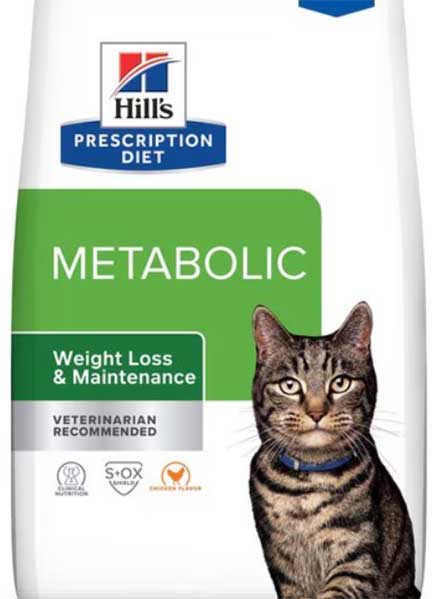
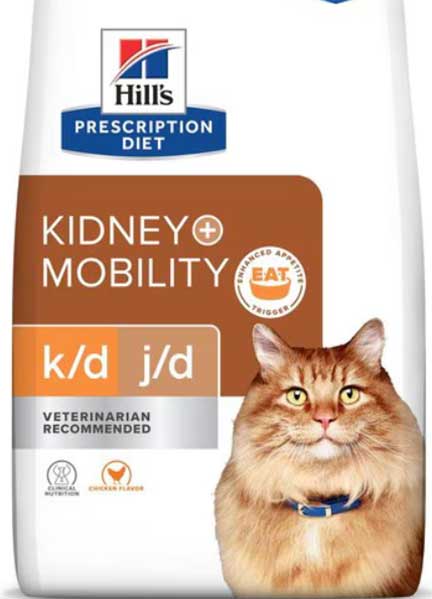
Hill’s makes prescription diets called Metabolic, and Kidney + Mobility, tailored to cats that are obese or have kidney disease.
Arthritis tends to be a disease of the aging. Older pets have different nutritional needs that need to be addressed. These needs cannot be addressed by going to a pet store and listening to the advice of some amateur nutritionist behind the counter trying to sell you the latest gimmick in canine food marketing.
(Use senior cat care supplements to support joint health)
It comes after you discuss your cat’s individual lifestyle needs with your veterinarian, your pet is given a thorough physical exam, and your veterinarian has blood panel and radiographic tests on your pet. Only then will the full picture of your pets needs be understood, leading to a custom treatment protocol specific for your pet.
Chondroprotective agents called neutraceuticals can help in some cases. These are the chondroitin sulfate- glucosamine products available everywhere, including the checkout stand at Trader Joe’s.
They are not a panacea, and its important to take a critical look to see if they are working in your pet’s case. Sometimes the placebo effect seems to be transmitted in our minds to our pets, and we do not have an objective standard to determine if these medications truly help. Fortunately they do not seem to hurt, so we can achieve or first goal of “do no harm” as veterinarians.
NSAID’s (non-steroidal anti-inflammatory drugs) are a tremendous advancement in the treatment of arthritis. Non-steroidal means they do not contain cortisone, which was one of the primary drugs used to treat arthritis in the recent past.
(Using cat pain relief support products can help improve comfort)
The NSAID’s are better at treating arthritis when used judiciously to maximize their good effects, while minimizing their potential for side effects.
Every pet reacts differently, so if one NSAID does not seem to work, we will try another. In cat’s we use this drug sparingly if it all due to their inability to tolerate their use long term. The NSAID’s we use in cats are called Meloxicam, Metacam, or Onsior.
Pain Medication
The more common analgesics used in cats are:
Buprenorphine
Gabapentin
Tramadol
Veterinary Neuronal Adjustment (VNA or VOM) is a tremendous treatment modality that uses the bodies natural healing processes without the use of any drugs. It involves stimulating the autonomic nervous system (specifically the sympathetic branches) and provides substantial pain relief. We have been using VNA at the Long Beach Animal Hospital for over 25 years. This is especially important in cats, since they do not tolerate NSAID’s well for long periods of time.
Therapy Laser brings an additional and highly effective treatment modality that again does not involve the use of drugs. This laser penetrates the hair and skin and goes right to the problem area to decrease inflammatory mediators. We recently updated our equipment to include a new therapy laser called MLS that treats using two different wavelengths.
Acupuncture can also be used to augment all of the above therapies. Dr. Seto and Dr. Yamamoto are both certified in acupuncture in animals. Cats do well with acupuncture.
Stem cell therapy is starting to be used, utilizing your dog’s own fat cells. It is still in the early stages, and treatment is not long lasting. If this area of treatment evolves and becomes more practical, we will utilize it.
Exercising your pet in the cooler part of the day, without excess trauma like jumping for long periods of time, will keep your pet flexible, the joins warm and lubricated, and keep its weight under control.
In older cats that are prone to arthritis there are several common sense things to do:
Raise the water and food bowls slightly. This is because cats get arthritis in the elbow joint, and elevated bowels allow them to feed with the elbow in extension, which is less painful. It also gives cats with hip and stifle (knee) pain a more comfortable sitting position when feeding.
Have several litter boxes around the house, make sure they do not need to go up the stairs to access them, and if the litter pans have tall sides see if they can be cut down for easy access.
If your cat likes to perch on a window sill or lay on your bed make sure it does not need to jump to access these areas, and set up some steps for easy access.
Due to the high rate of occurrence of kidney disease in cats, coupled with their poor drinking habits, this species can easily become dehydrated. Please make sure you change the water in the bowl 3x per day at the least to help flush out the waster products that are building up, and also to keep it well hydrated to lubricate the joints.
A relatively new drug from Zoeitis, called Solensia (Frunevetmab), is a once-monthly injection of a monoclonal antibody to treat arthritic pain. It targets nerve growth factor (NGF), a key cause of pain in arthritic animals. When this drug becomes available, and we have tested it enough to make sure it works and is safe, one of our doctors will let you know if it applies to your pet when we diagnose arthritis.
Please be realistic about the fantastic claims that abound on the Internet for cheap treatments that will help your pets arthritis. These treatments have show to be nothing more than effective marketing. This disease is complicated and serious, and needs more than some supplement you purchase online.
What is Arthritis?
Arthritis literally means inflammation of the joint, but the term is used more generally to describe several different processes. These include degenerative joint disease (DJD), infectious joint disease, immune mediated joint disease, and crystal-induced joint diseases.
Many people use the term arthritis synonymous with osteoarthritis (OA), a complex, slowly progressive, and degenerative arthritis that is characterized by the gradual development of joint pain, stiffness, and a decreased range of motion.This is the type of arthritis common in older pets, and is increasing as pets live longer.
As we learn more about the subtleties of feline medicine we realize that many cats get significant arthritis especially in their lower back. This problem, also know as feline hyperesthesia syndrome, causes tremendous discomfort and decreases the quality of life for many cats.
Anatomy
A normal joint is lined with hyaline cartilage, which is the covering over the end of the bone. It provides an almost frictionless surface for the bones to articulate, and also acts as a shock absorber. Hyaline cartilage is comprised of chondrocytes, proteoglycans, and collagen.
A normal joint is encased in a fibrous structure called the joint capsule. The joint capsule helps stabilize the joint and keeps the cartilage bathed in synovial fluid. Ligaments, which attach bone to bone, also provide joint stability.
This picture is from an actual surgery on the knee of a pet with a ruptured cranial cruciate ligament. The head is on the right, the foot is on the left, so the joint appears horizontal.

This picture from surgery during repair of a ruptured cranial cruciate ligament shows a ridge of bone running horizontally at the bottom (arrow). This is what arthritis looks like in the joint. The normal smooth cartilage above it is the normal groove of the knee (stifle) joint. The patella runs along this groove.
Cause
The cause of this complex and multi factorial disease can be primary or secondary. Primary OA results from normal stresses acting on abnormal cartilage. Secondary OA is more common, and results from abnormal stresses acting on normal cartilage, such as an unstable joint caused by feline hip dysplasia. Some of the factors that can cause OA include excessive exercise, obesity, poor nutrition, trauma, immune reactions, and genetic predispositions.
The following radiograph on the top is from a normal shoulder joint. The one on the bottom has an abnormal flap of cartilage at the arrow. This is know as osteochondritis dissecans, and is a primary OA. Without this radiograph we never would have know this limping pet had this problem.
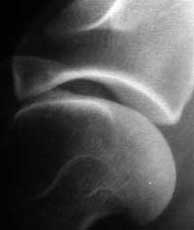
This normal shoulder joint shows no problems
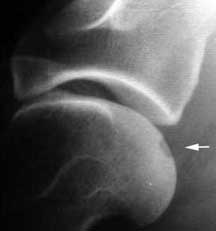
The white arrow points to a flap of cartilage that has eroded off
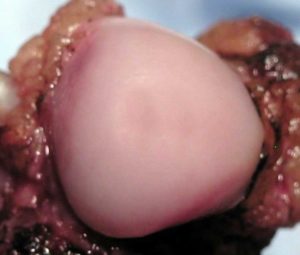
To help you understand what you are looking at in the above two radiographs, this is what a normal shoulder joint looks like during a necropsy. Notice how smooth it is.

These two elbows are normal

This elbow from a different pet shows advanced arthritis, as evidenced by the moth-eaten appearance. It is probably secondary to elbow dysplasia
Damage to cartilage might occur as one event, or be the culmination of many small events over years. As swelling occurs, and the joint capsule becomes stretched, pain occurs. Your pet will use the joint less because of this pain, leading to muscle atrophy and the inability of the surrounding tendons and muscles to support the joint. As the muscular support of the joint weakens the joint capsule, ligaments, and cartilage become further stressed and stretched, leading to even further pain.
At this point the body releases chemicals called inflammatory mediators, (the therapy laser works on these mediators) which further damage the cartilage and add to even more swelling. It is obvious that this rapidly becomes a vicious cycle leading to debilitating pain. When OA progresses to the point that you notice your pet in discomfort or pain, the damage to the joint might be irreversible.
Diagnosis
Signalment
OA is commonly diagnosed in older cats. Some breeds are prone to getting it because of the conformation of their joints.
History
It is important to understand the initial symptoms might be subtle. Your pet will be experiencing pain or discomfort, yet it might not show any external signs. Close observation of your cat’s daily habits as it ages will help you to see the subtle signs of pain. Pay more attention to behavior changes that limping or lameness so that you don’t miss the symptoms. Don’t assume these changes are just an aging cat.
Symptoms are related to joint pain and stiffness. Initial symptoms are subtle and easily missed. Most owners notice a pet losing its ability to perform normally, such as a reluctance to jump or climb stairs, or even limping. Stiffness after rest that diminishes rapidly as your pet starts moving and warms up is a hallmark sign of OA. Other symptoms of arthritis include lethargy and poor appetite, which are the result of pain. They might be even be slow getting up from a nap (the activity cat’s do best)!.
As the disease progresses these cats might be in overt pain and lose their appetite. Some of these symptoms occur in other diseases, notably hip dysplasia and intervertebral disk disease. The are treated in similar ways in some cases, in different ways in other cases, so a proper diagnosis is imperative.
The most common areas for cats to have arthritis are the elbow, knee, hip, and spine. Most cats tuck their forelimbs under their bodies when they rest. If your cat consistently holds its elbow out (in extension) that could be a sign of elbow pain, a common area for arthritis to occur in cats. Cats that are reluctant to jump up to the bed or a window sill could have arthritis.
Other symptoms in cats include unkept fur due to pain when grooming. There could be overgrooming in painful areas leading to hair loss at the joints. Overgrown claws could be a sign it is not moving normally due to pain.
Irritability or aggression, decreased grooming, and hair loss (alopecia) over arthritic joints.
At the end of this page is a link to the Feline Musculskeletal Pain Index to help determine if your cat is having a problem.
Physical Exam
In some pets there are no abnormalities detected during a physical exam. Pain or discomfort might be found by palpating a joint or pushing on the mid or lower back. We might feel grinding of joints (crepitus), a swollen joint, abnormal bone formation and roughened bones, or inflammation at the joint. Pets with longer standing OA might show atrophy of muscles. Range of motion might be limited and cause discomfort or pain. There might also be subtle signs during the neurologic part of the exam.
Cats tend to have less crepitus and range of motion problems, but do have more joint swelling and pain.
Some pets are so distracted during an exam (this happens to us people commonly) that they do not exhibit signs of pain when touched in painful places. This is why we need some basic diagnostic tests.
Diagnostic Tests
Radiography is an important diagnostic test to perform in a cat suspected of having OA. Even though a radiograph can be normal in a pet that has OA, it is a substantial help in verifying the diagnosis and determining the degree of involvement. Cats tend to have less radiographic evidence of arthritis, and might even have more cartilage problems than bone problems in some cases.
There are many diseases that can mimic the symptoms of OA, so a radiograph should be taken on every suspected OA to eliminate these other causes.

This is a normal cat spine radiograph

Do you see any problems with this spine? It has a type of spinal arthritis called spondylosis.

The spondylosis areas have been circled

Oftentimes it involves many vertebrae

The problem vertebrae circled

This is the same radiograph as above only enlarged

This one has it at only the last 2 lumbar vertebrae

Normal hips on a cat

The start of hip dysplasia

This older cat limping on its right rear leg was assumed by the owner to be arthritics. The fractured femoral head shows the importance of taking a radiograph
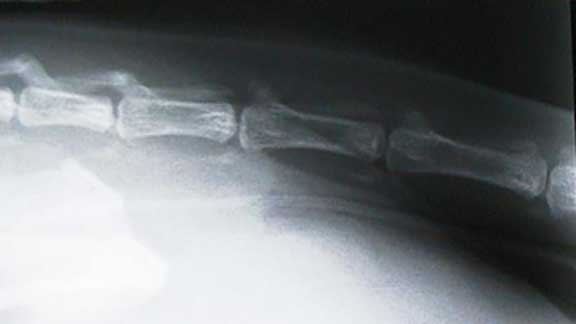
This cat was weak in its rear quarters. Can you see the problem on the radiograph?
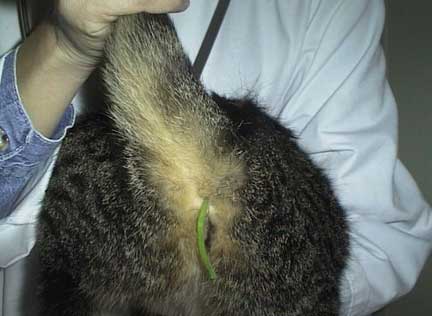
Does this view help? See if you can visualize the rubber band on the radiograph above.
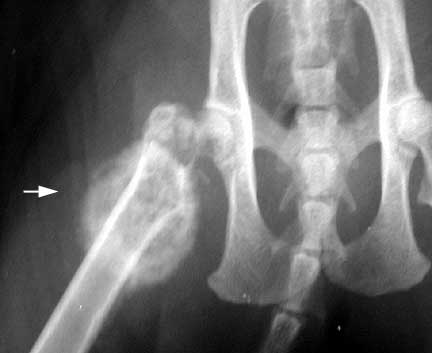
This is a serious form of cancer, and usually requires amputation
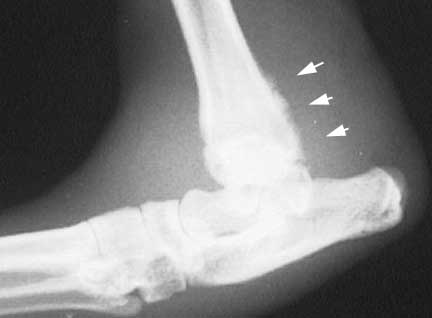
The other important differential on radiograph like this is a bone infection called osteomyelitis. The fuzzy or roughened edges at the arrows is the infection.
Treatment
Treatment of OA initially includes correction of any underlying primary diseases such as surgical correction of a torn ligament or arthroscopy to remove a cartilage flap. Once any primary disease has been addressed, the goal of treatment is to slow the progression of OA and to keep your pet comfortable. It’s important to realize that there is no cure for OA. The following are the treatment options we find that are most successful, and were mentioned at the beginning of this page.
As you will see from the following treatments, we use a wide variety of treatment options, and customize them for your pet’s specific situation. We always use a balanced approach, utilizing drugs only if needed, and at the lowest dose possible.
Nutrition
Most pets with OA will require some adjustment in their lifestyle. Weight management is most important, since obese pets put unnecessary strain on joints, leading to a more rapid progression of the disease. Depending on the degree of obesity your veterinarian might put your overweight cat on Hill’s Metabolic + Kidney or just Metabolic.
Like all Hill’s foods it highly recommend in almost every case of arthritis unless your pet has some other disease that precludes their use. All Hill’s Prescriptions Diets our doctors recommend are unconditionally guaranteed. We have a detailed page on Nutrition Advice to help clear the air on all the hype that exists on the Internet to get you to put your money into this multi billion dollar a year business.
Omega-3 fatty acids have been shown to improve activity in cats with arthritis. They are included in many health diets already, so added amounts are not needed in most cases.
Exercise
Excessive exercise that leads to pain or discomfort should be avoided, but moderate exercise is recommended. Each patient will have their own unique program of weight management and exercise, and we can help you individualize one for you and your pet.
There are even veterinarians that specialize in rehabilitative therapy, with specialized swimming pools and therapy methods.
Chondroprotective Agents
These products typically contain precursors of cartilage and joint fluid synthesis. We like to use these medications first since there are negligible side effects and they might be an aid in preventing further deterioration of the cartilage. Hill’s J/D contains adequate amounts of these ingredients. Please remember that if a little is good, a lot is not necessarily better, because you disrupt the nutrient balance that is so important in nutrition.
These products have a positive effect on cartilage matrix synthesis and an inhibitory effect on the enzymes that break cartilage down. They might require up to 6 weeks of use before OA symptoms are diminished. Unfortunately they do not work in every case, so be realistic and make a careful assessment as to their efficacy.
Adequan
Adequan (polysulfated glycosaminoglycan) is an injectable chondroprotective agent. Adequan incorporates into joint cartilage and inhibits several enzymes that break down cartilage. No studies have been done in animals other than horses and dogs, but it appears to be safe and effective in other species including cats, rabbits, ferrets, and birds.
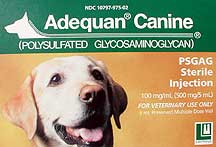
The intramuscular injections are initially given twice weekly (every 3-4 days) for a month, then given monthly as needed. Adequan seems to be most effective when given in the early stages of OA.
Dasuquin
Unlike the injectable adequan, Dasuquin and other oral joint supplements are considered nutraceuticals, or nutritional supplements, and do not require FDA approval. Cosequin contains glucosamine and chondroitin sulfate, agents proven to be effective at supporting and protecting joint cartilage.
In addition, Dasuquin contains ASU (avocado/soybean unsaponifiables) that makes the glucosamine and chondroitin sulfate more effective.

NSAID’S
The non-steroidal anti-inflammatories (NSAID’S) are the most commonly used drugs in treating OA in dogs. These can be used in cats, but only if kidney function is normal and they should be used in the smallest does possible at decreasing does intervals. The ones we used are meloxicam and Onsior.
Before we start your cat on NSAID’S we perform an examination and run a baseline blood sample. Every 6 months we will examine your pet and recheck the blood to look for any potential side effects. This will make sure kidney and liver function is adequate.
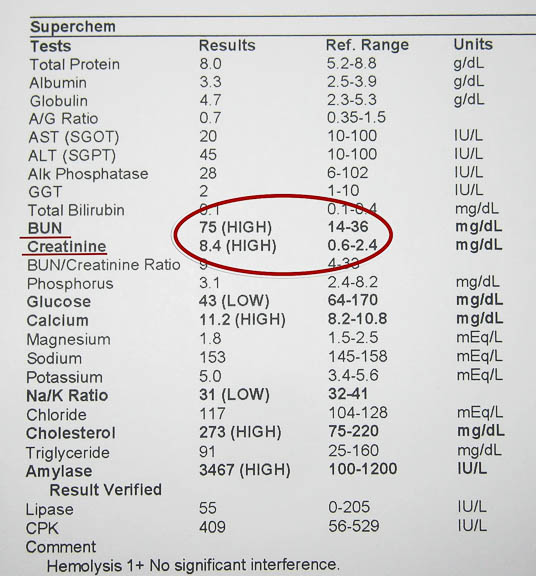
This cat has kidney disease, and the problem needs to be addressed before we institute NSAID therapy. We would use a lower dose of the NSAID many times in a pet with kidney disease like this to make sure the NSAID is not making the kidney disease worse.
The best way to minimize the potential for side effects, yet still get the most out of NSAID’s, is to use the lowest effective dose of the NSAID of choice, and combine it with proper diet, VNA and Companion Laser as additional treatments. You will learn more about these treatments below.
VNA (also called VOM in the past)
An additional treatment modality that has yielded great success for well over the last 20 years is called VNA. It has been a game changer for us in the treatment of arthritis in a wide variety of animals.
It is a non-invasive and non-painful way to stimulate the autonomic nervous system to help correct the problem. Through the use of VNA we can decrease the use of the above medications in almost all cases. By decreasing the use of these medications, we help your pet live a longer and healthier life, while decreasing you medication costs over the life of your pet. Click here to learn more about VNA.
Cats respond very well to VNA treatment. They get what is called the “Feline Hyperesthesia Syndrome. In this syndrome, their lower backs are extremely sensitive, so much so that they start licking compulsively when scratched there, can bite an owner due to pain, and even go into a seizure.
Look how sensitive this cat is when scratched at its rear quarters
As we perform VNA the cat relaxes completely because the sensitivity is diminished
We use VNA in a wide variety of species. This rabbit has GI stasis, and felt much better after this treatment.
Companion Laser Therapy
In the last few years we have added a new and natural way to treat arthritis using the Therapy Laser. This modality has been used to treat people for over 30 years and has recently been approved by the FDA for use in animals. This treatment modality has been a huge boon to our geriatric pets with painful arthritis, especially when used with low dose NSAID’s and VNA. To learn more about it please click here.
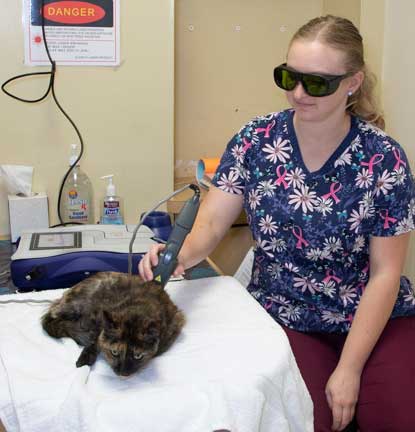
When we do this treatment the environment is calm and relaxing, and most cats just sit there enjoying the treatment
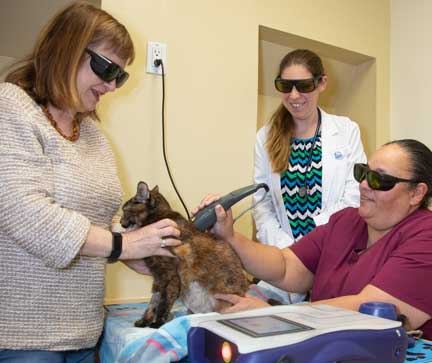
You can be al part of it and watch, just like our student extern Ellie from Mich State’s veterinary school
Acupuncture
This can also be used at any time to augment the treatment already being utilized. To learn more about how we use acupuncture follow this link.
Miscellaneous Medications
Gabapentin
This seizure medication is another useful adjunct as the arthritis progresses.
Brupenorphine
Short term use can be effective for pain control.
Rehabilitation
This can range from using wobble boards and exercise balls up to underwater treadmills. These can be beneficial, and we would send you to a veterinary specialist to help determine if this will help in your pet’s case.
Here is the link to the Feline Musculskeletal Pain index. Please print it out and bring it in when we examine your cat.