

Introduction
The upper 4th premolar (carnassial tooth) of the dog has two deep roots that must be properly removed, or the abscess will remain, and the tooth will continue to drain under the eye. The tooth and its root are large in comparison to the other teeth, and must be removed in segments.
This problem can occur in any animal with deep roots, dog or cat, canine or feline, or carnivore, but it is most prevalent in the dog.
We follow the protocols of the American Veterinary Dental Association in caring for this problem.
What is a tooth root abscess?
This is a painful infection at the base of the tooth where it inserts into the jaw. This infection can spread into the bloodstream and seed important organs like the kidney, heart, and liver with bacteria.
(Dog dental care kits can help prevent oral infections)
Causes of a Canine Tooth Abscess
A tooth root abscess forms when bacteria pass through the hard enamel at the crown of the tooth enter the exposed root canal of the tooth, through the next layer called the dentin, to the pulp cavity where the nerves that innervate the tooth and the blood vessels that nourish the tooth reside. This area is called the pulp cavity.
It is sometimes trauma, in the form of slab fractures of the tooth, that start the process of the bacteria invading pass the hard enamel of the crown.
The infection that occurs at the root of the tooth is also caused by dental disease. The problem progresses from gingivitis to periodontal disease, and can be prevented with proper dental care.
(Tartar control dog food can help maintain oral hygiene)
This is so important that we have dedicated a full page to dental care.
Most Common Location for a Tooth Root Abscess in Dogs
When periodontal disease is involved, it is the upper 4th premolar (carnassial) tooth that has the problem in almost all cases.
Symptoms of Dog Tooth Abscess
A chronic drainage tract usually is present just under the eye of the dog. Sometimes there is an actual hole in the skin, other times there is only swelling or discharge matted to the hair. Most dogs resist when you pet them on the muzzle. An odor might be present also.
(Dog breath freshening solutions can help maintain oral hygiene)

The drainage tract just under the eye where the root of the tooth is
Dental Equipment Used to Treat Dog Carnassial Tooth Abscess
A high speed drill is needed to cut through the tooth enamel of a canine. It is a precision instrument that is powered by our dental unit. The high speed means there is little trauma to the surrounding tissue.
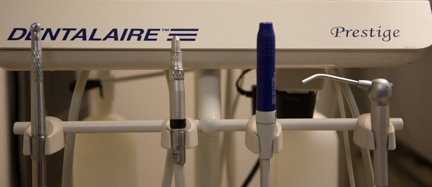
Our dental machine has a wide array of accessories handle any tooth problem like this
Diagnosis
The draining tract under the eye is a big clue as to this problem. There can be other causes to this draining, including foreign bodies, skin infections, burns, and cancer.
An oral exam is the first start, although this is a painful condition, and sometimes we get limited information from the oral exam on a pet that is not anesthetized.
(Dog dental chews for plaque control can help reduce buildup)
Once anesthetized we can more thoroughly visually assess the area, and probe it with proper dental instruments.
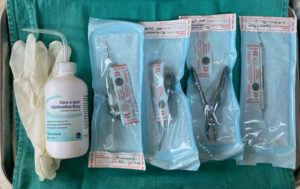
Dentistry and toot removal require specialized instruments
Radiology is one of the more useful tools in this diagnosis because it lets us visualize the root of the tooth as it enters the jaw.
(Pet dental health monitoring kits can help track oral issues early)
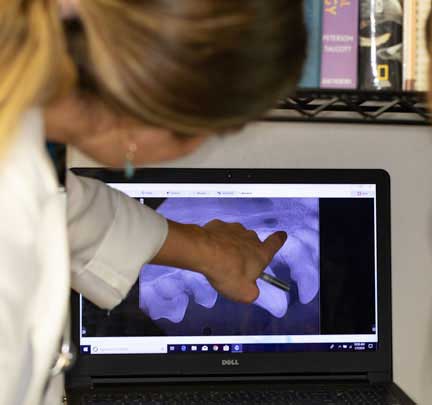
We routinely take digital radiographs to assess this tooth and look for problems in other teeth
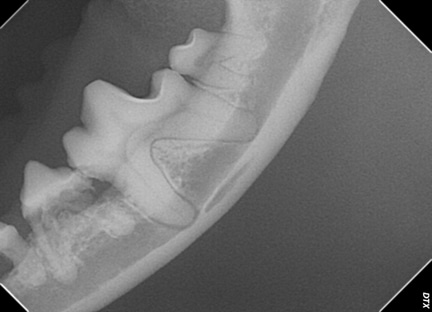
Digital radiographs give us tremendous detail to find problems that are easily missed just by looking at the tooth
How Do We Treat Tooth Root Abscess in Dogs
Depending on the cause and location of the abscess one option is root canal therapy (endodontic treatment), which can preserve the structure of the tooth. This is done by a veterinary dental specialist.
The other option, especially when periodontal disease is the cause, is extraction. This is the option that the majority of people chose due to its effectiveness in relation to cost and time.

Treating this disease is a team process, that includes several staff members in addition to one of our veterinarians
Once anesthetized the doctor was able to localize an abscess after a thorough oral exam and probing with special dental instruments. You can see the purulent material coming out of the abscessed root in this video.
Anesthesia
These canine patients need to be anesthetized. We have a detailed page on how we anesthetize a wide variety of species at our hospital. Click here to learn more about anesthesia.
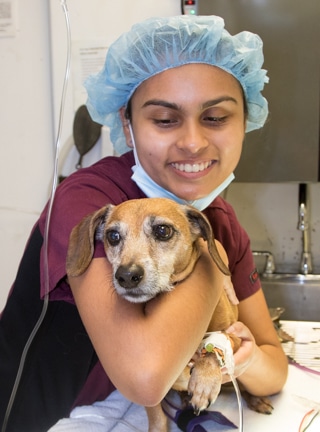
All of our dog anesthetic patients are giving customized treatment that includes plenty of TLC
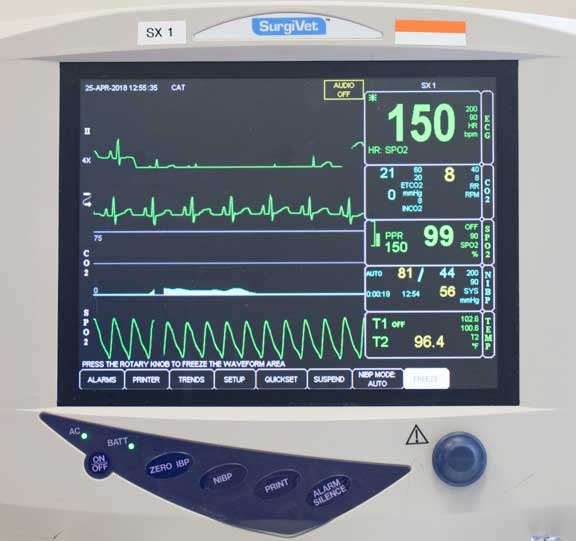
Anesthesia is closely monitored at all times keeping an eye on heart rate and rhythm, respiratory rate, and oxygen and carbon dioxide levels
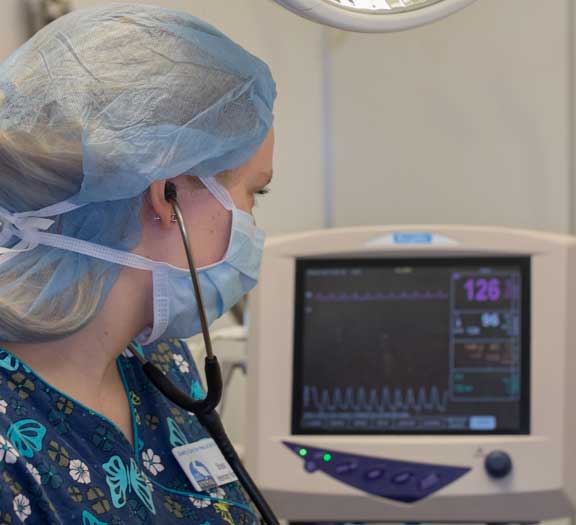
Our nurse anesthetist monitoring our patient while also staying “hands on” by listening to the heart with a stethoscope
Splitting the Tooth
The tooth is split in half with the high speed drill. This allows us to remove each half of the tooth separately, aiding in root removal. We use a dental elevator to remove this tooth just like a retained deciduous tooth. Each half of the tooth is gently elevated out.
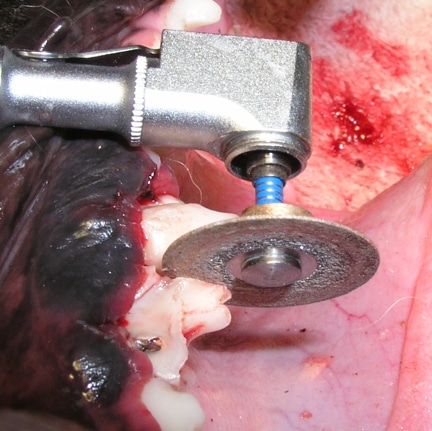
Our dental equipment includes a special high speed drill to cut the tooth in half for much easier removal
Removing Tooth
The split tooth is gently removed with the elevator. This is the most arduous part of the procedure and can take 15 minutes or more to complete. It is important to remove all of the root for the problem to resolve. After removal the opening in the gums is flushed with an antibacterial solution to remove all of the infection.
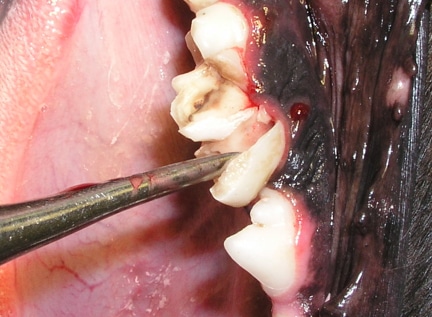
The elevator is used slowly and gently to make sure we do not leave an root
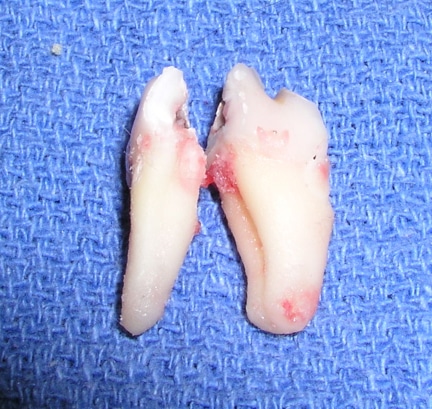
The removed tooth, root and all
Healing Process
The hole that remains can be sutured or left to heal on its own. The healing time is within 1-2 days, whether it is sutured or not. The drainage under the eye disappears within a few days also. Antibiotics are usually administered at home for 7 days.
A draining tract under the eye of a dog or cat tends to be a chronic problem and not an emergency. If you do see such a tract, or if your pet is pawing at its face, drooling excessively, painful when you touch the face, or rubbing the face on the ground, there could be other problems like a foreign body stuck in the mouth. Foxtails can enter the mouth and migrate to the skin and cause a drainage tract like identical to this tooth problem.
Best antibiotic for dog tooth infection
Because an infection is involved, it is not unusual for one of our doctors to utilize antibiotics prior to and after removal of the 4th premolar tooth. Proper antibiotic stewardship the two practice at the Long Beach Animal dictates that we treat each pet on an individual basis and do not routinely use antibiotics just because we have always used them in the past.
Typical antibiotics used for a tooth infection include:
- Clavamox
- Clindamycin (Antirobe)
Home Treatment for Tooth Root Abscess
Since this is a painful condition, with the potential to cause more problems if the bacteria spreads into the bloodstream, initial treatment always needs to be performed professionally by a veterinarian.
Once the tooth is removed your pet will routinely go home with pain medication and instructions to feed soft food if it is not eating well. Most pets feel much better almost immediately since the pain is gone and they rapidly return to normal eating.
Emergency
If you think your pet’s problem is an emergency, The Long Beach Animal Hospital, staffed with emergency vets, is available until the evenings 7 days per week to help if your pet is having any problems, especially shock, seizures, pain, difficulty breathing, or bleeding.
Think of us as your Long Beach Animal Emergency Center to help when you need us for everything from minor problems to major a major emergency. We serve all of Los Angeles and Orange county with our Animal Emergency Center Long Beach, and are easily accessible to most everyone in southern California via Pacific Coast Hwy or the 405 freeway.
If you have an emergency that can be taken care of by us at the Animal Emergency Hospital Long Beach always call us first (562-434-9966) before coming. This way our veterinarians can advise you on what to do at home and so that our staff and doctor can prepare for your arrival. To learn more please read our Emergency Services page.